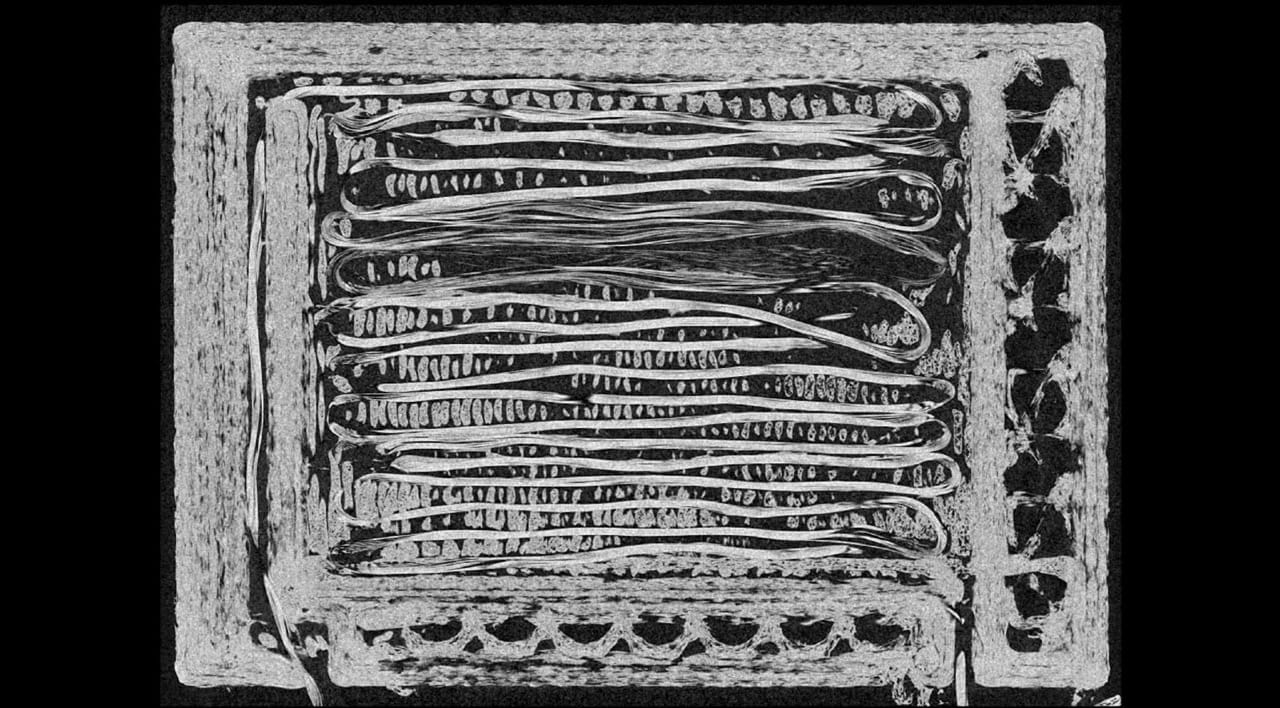
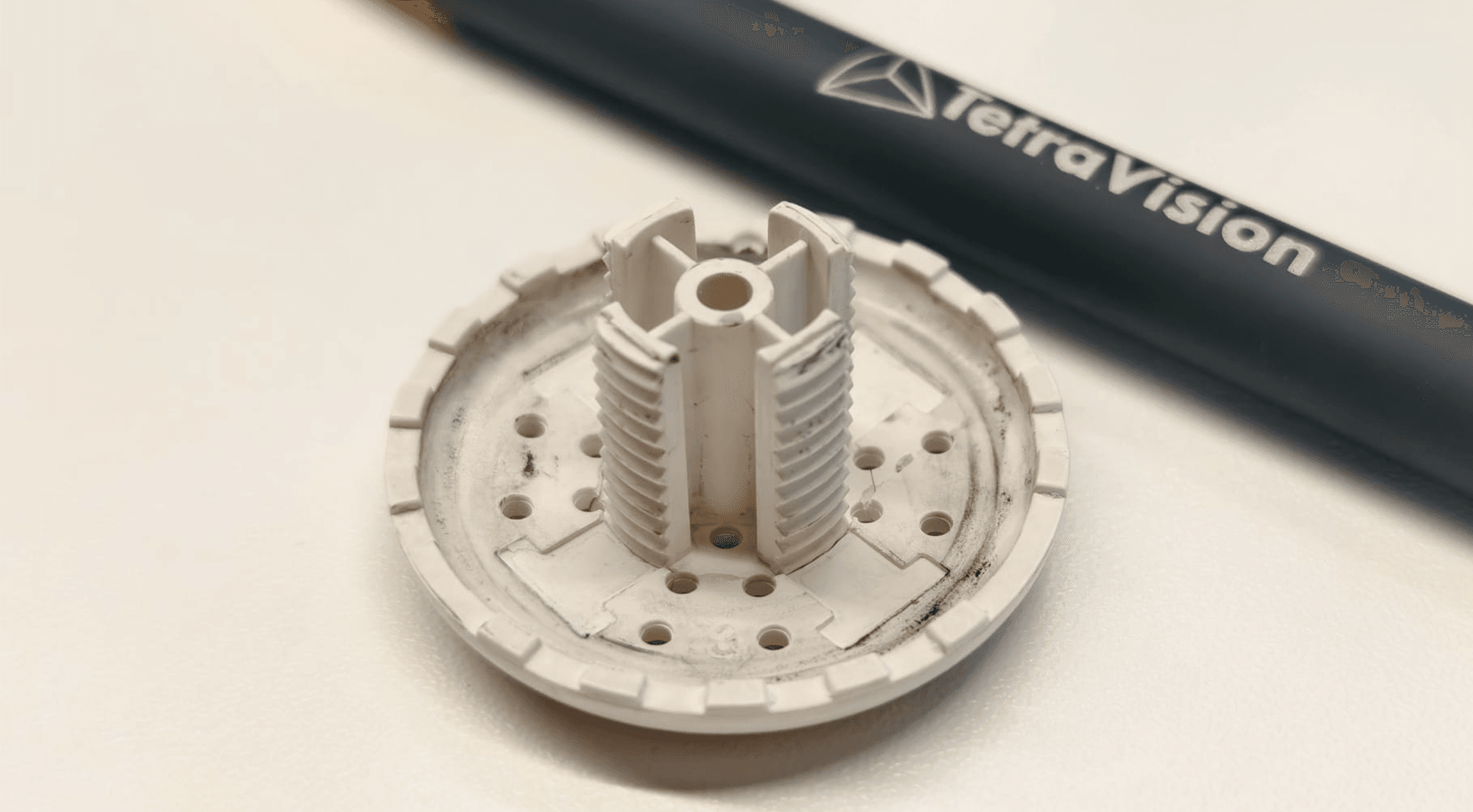
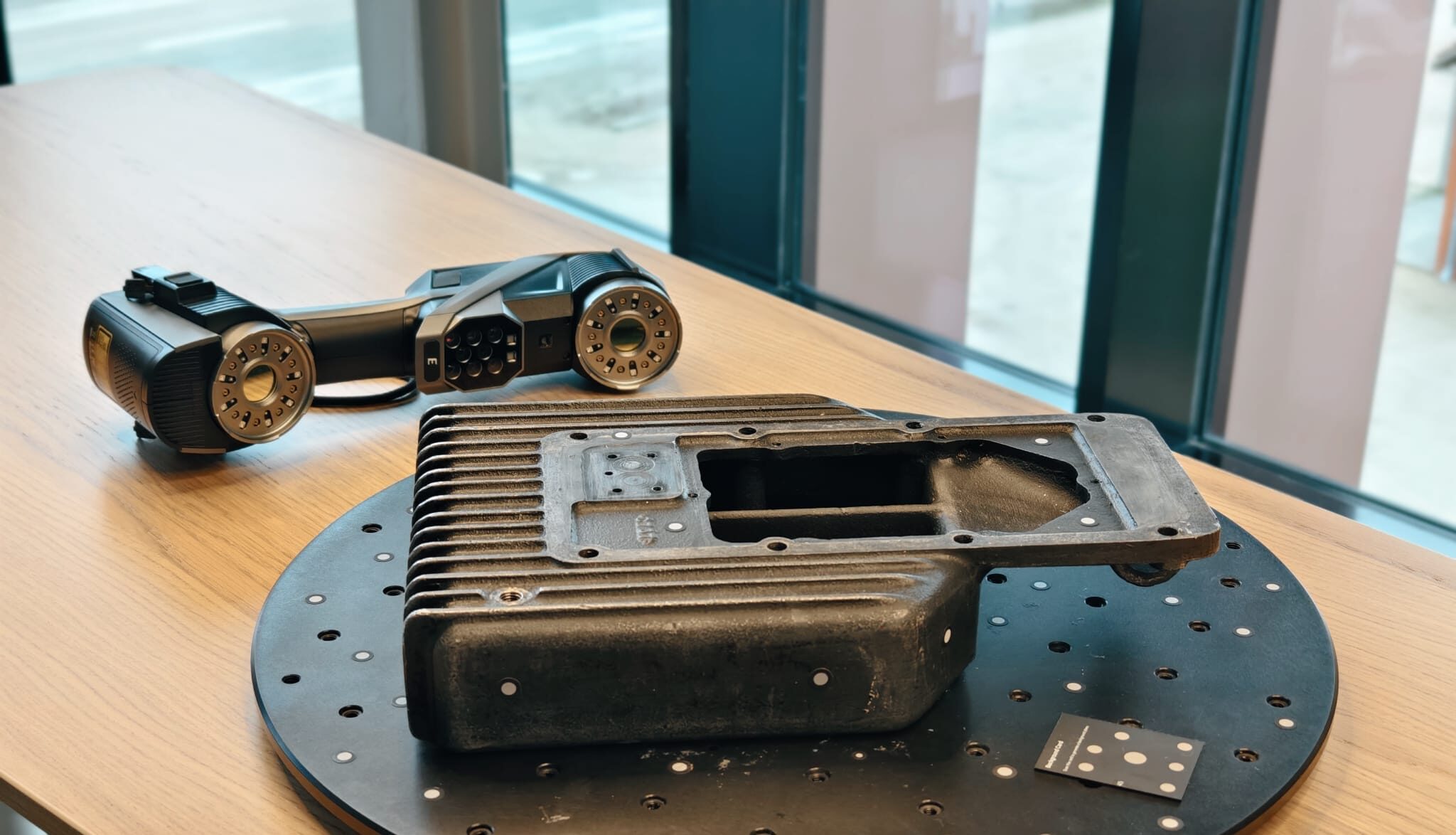
How do you check whether a valve seals properly if the problem disappears as soon as you take the product apart? Using X-ray CT scanning, we identify the cause of these types of leakage problems without having to disassemble a single component. The case study below is representative of the work we regularly perform for the packaging industry.
Project overview
| Type | Representative case study, based on recurring analysis work for the packaging industry |
| Client | International manufacturers of consumer goods (anonymous for reasons of confidentiality) |
| Industry | Packaging / consumer products |
| Challenge | Leak in a bottle with a valve system, which cannot be detected by dismantling it |
| Technology | X-ray CT scanning (ZEISS Metrotom 6 Scout, 225 kV) |
| Analysis | Comparative CT analysis of properly functioning and leaking specimens in ZEISS Inspect |
| Deliverables | Graphical measurement report + .zinspect viewer file |
The challenge: a problem that disappears the moment you try to measure it
A recurring problem in the packaging industry is leakage from bottles with a built-in valve system. The valve, a flexible membrane at the heart of the cap, is designed to contain the liquid and only allow it to pass through when the bottle is in use. If the valve fails to do this in part of the production process, you end up with leaking bottles.
It is often suspected that the valve is not positioned correctly. However, this suspicion cannot be confirmed using traditional measurement techniques. A cap with a valve system is a complex assembly of several components that are clicked together. If you take it apart to measure it, you end up disrupting the very position you want to check. The problem literally disappears the moment you try to investigate it.
The only way to assess this is to look inside whilst everything remains assembled. That is precisely where the strength of X-ray CT scanning lies: a non-destructive measurement that provides 100% of the data, including from the inside.
Our approach
- Selection of samples. Together with the customer, we select a range of bottles: some that function correctly and others with a confirmed leak. By scanning both groups, we can carry out a targeted search for the difference.
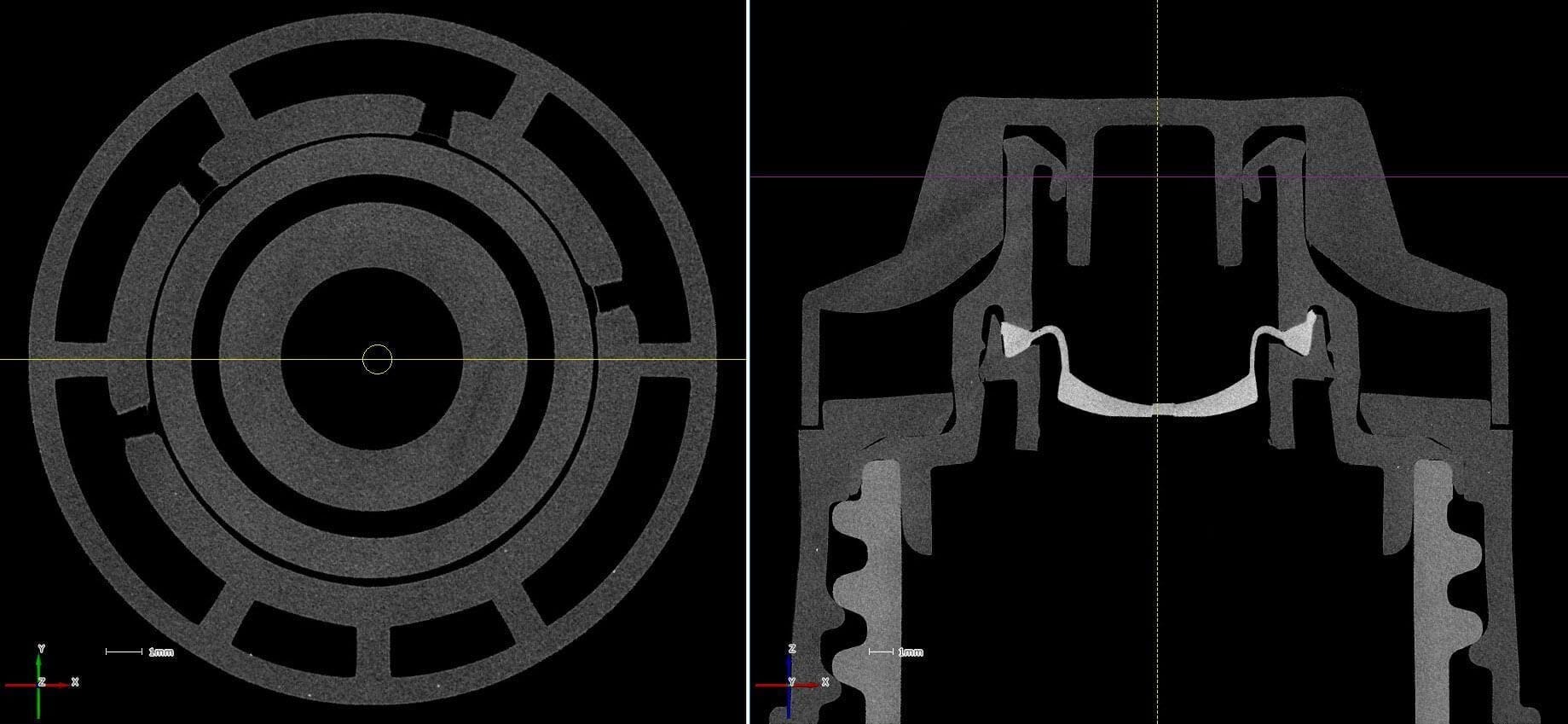
- CT scan of the complete assembly. Each bottle is scanned in its entirety using our ZEISS Metrotom 6 Scout. As the components are made of plastic, this scanner produces extremely sharp images of all internal components without the need to dismantle anything. Defects as small as a few voxels are visible in the data.
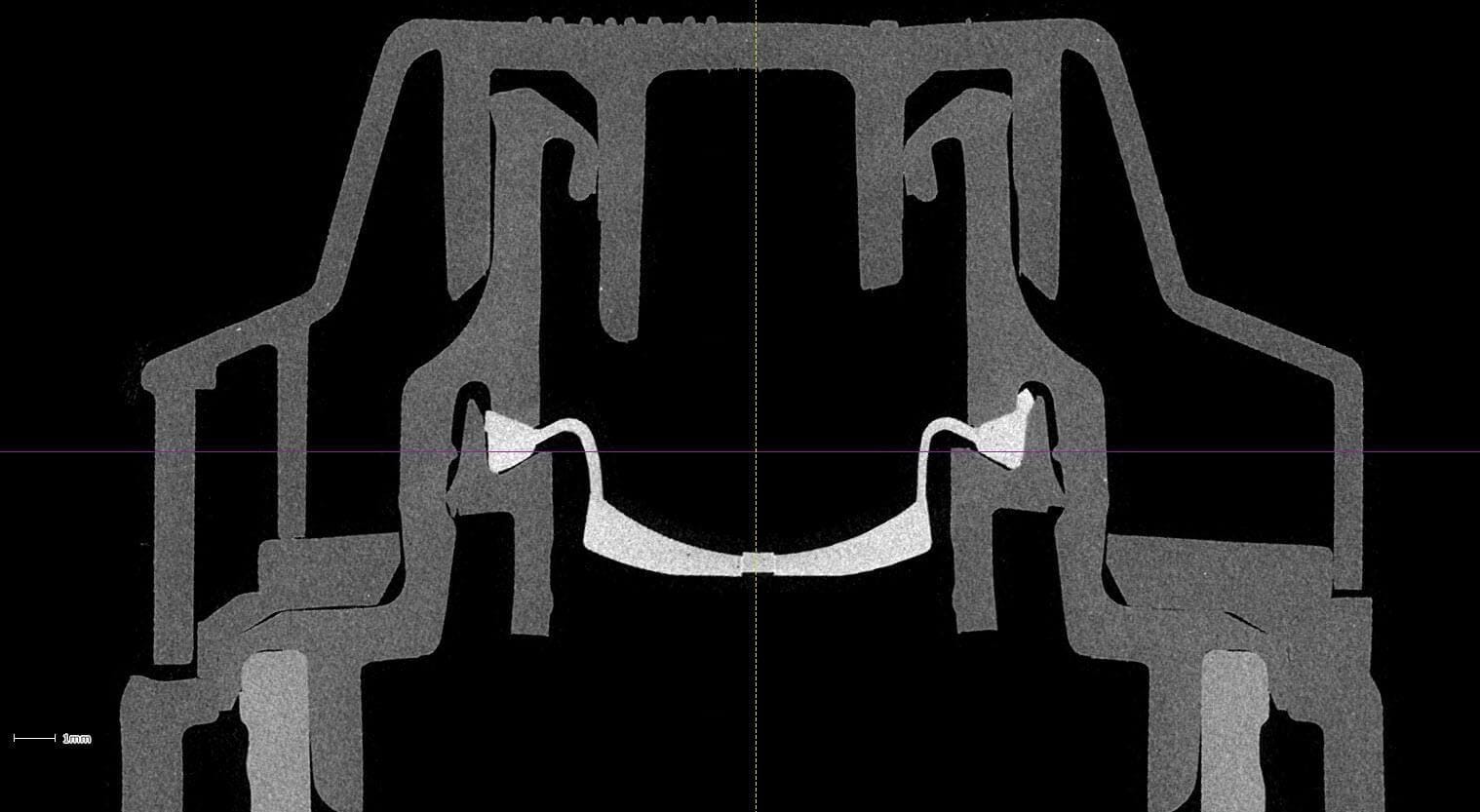
- Comparative analysis of the valve position. In ZEISS Inspect, we superimpose the scans of all units. This allows us to analyse the exact position of the valve and of the component that holds it in place. The difference between the units that are functioning correctly and those that are leaking thus becomes immediately apparent.
- Checking the seal. By positioning the cross-sections in exactly the right places, we check that the valve fits snugly all the way round and that the cap seals properly.
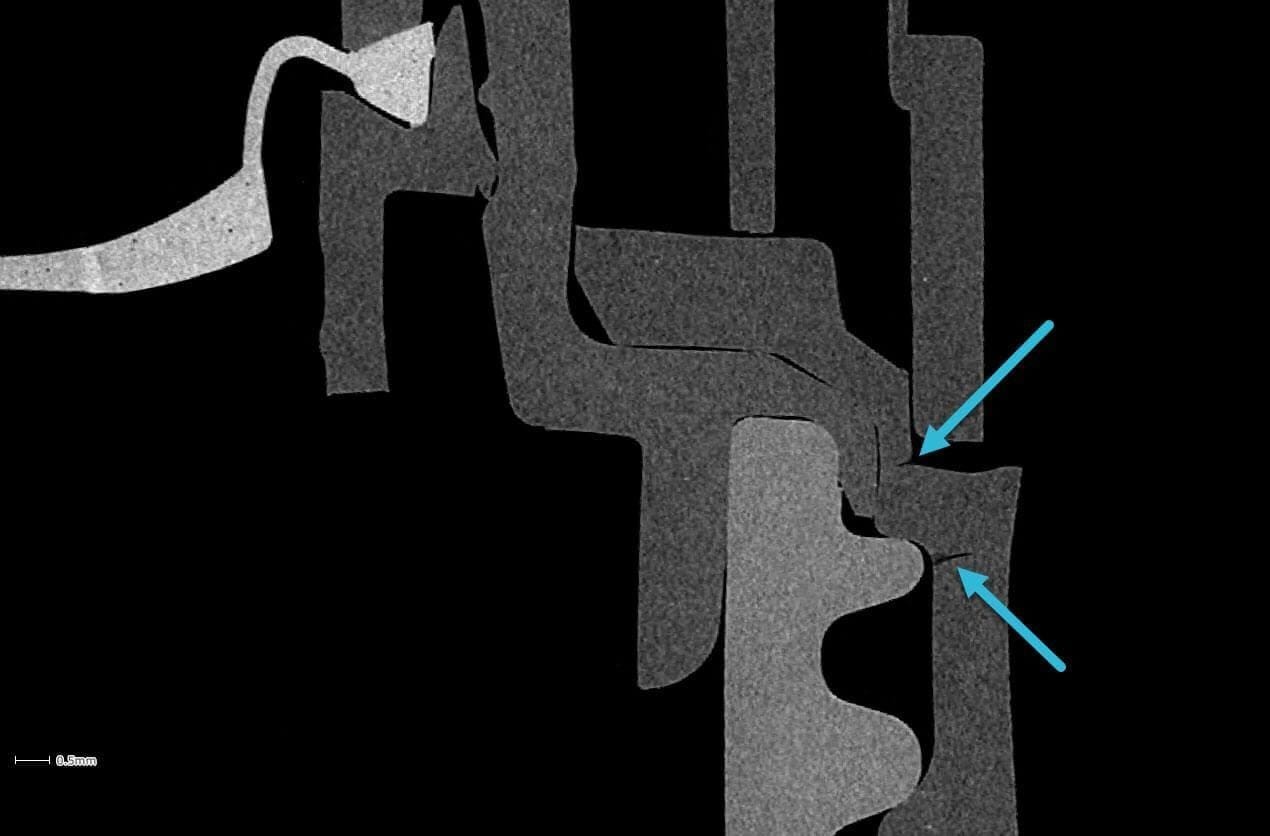
- Secondary findings. During analyses of this kind, we sometimes identify additional issues, such as small cracks in a component. These are unrelated to the leakage problem but pose a risk of failure. We also include such findings in the report so that the customer can take proactive corrective action.
The entire scanning process can be seen in the video below:
The result
The comparative CT analysis confirms the hypothesis: in the leaking bottles, the valve is not positioned correctly. The graphical report shows at a glance the difference between the good bottles and the leaking ones.
As the data is highly accurate and the report is visually clear and easy to interpret, our client can immediately make the necessary adjustments to their process to resolve the issue.
Scroll through your product yourself. Alongside the report, we provide a .zinspect viewer file. Using the free ZEISS Inspect viewer, the customer can open this file themselves and scroll through every cross-section of their own product, in 3D and down to voxel level. This ensures the data remains usable within the customer’s team even after the project has ended.
Why X-ray CT for the packaging industry?
We carry out this type of research on a very regular basis for the packaging industry. Typical applications include first article inspection (FAI), comparing mould iterations, PPAP dossiers and batch measurements, whereby multiple products are scanned simultaneously for a cost- and time-efficient inspection. The same principle applies in every case: we convert large volumes of scan data into the relevant visual information that enables you to make targeted adjustments to your process.
Is this another problem you can’t measure?
Is your quality issue hidden inside a product or assembly? We’d be happy to help you find the right measurement approach. Please get in touch at info@tetravision.be or on +32 16 91 04 20. We always reply within 24 hours.
Would you like to find out more about our CT services? Take a look at our X-ray CT scanning page.