3D scanning and reverse engineering of the transmission pan of a Cooper T65 (1963)
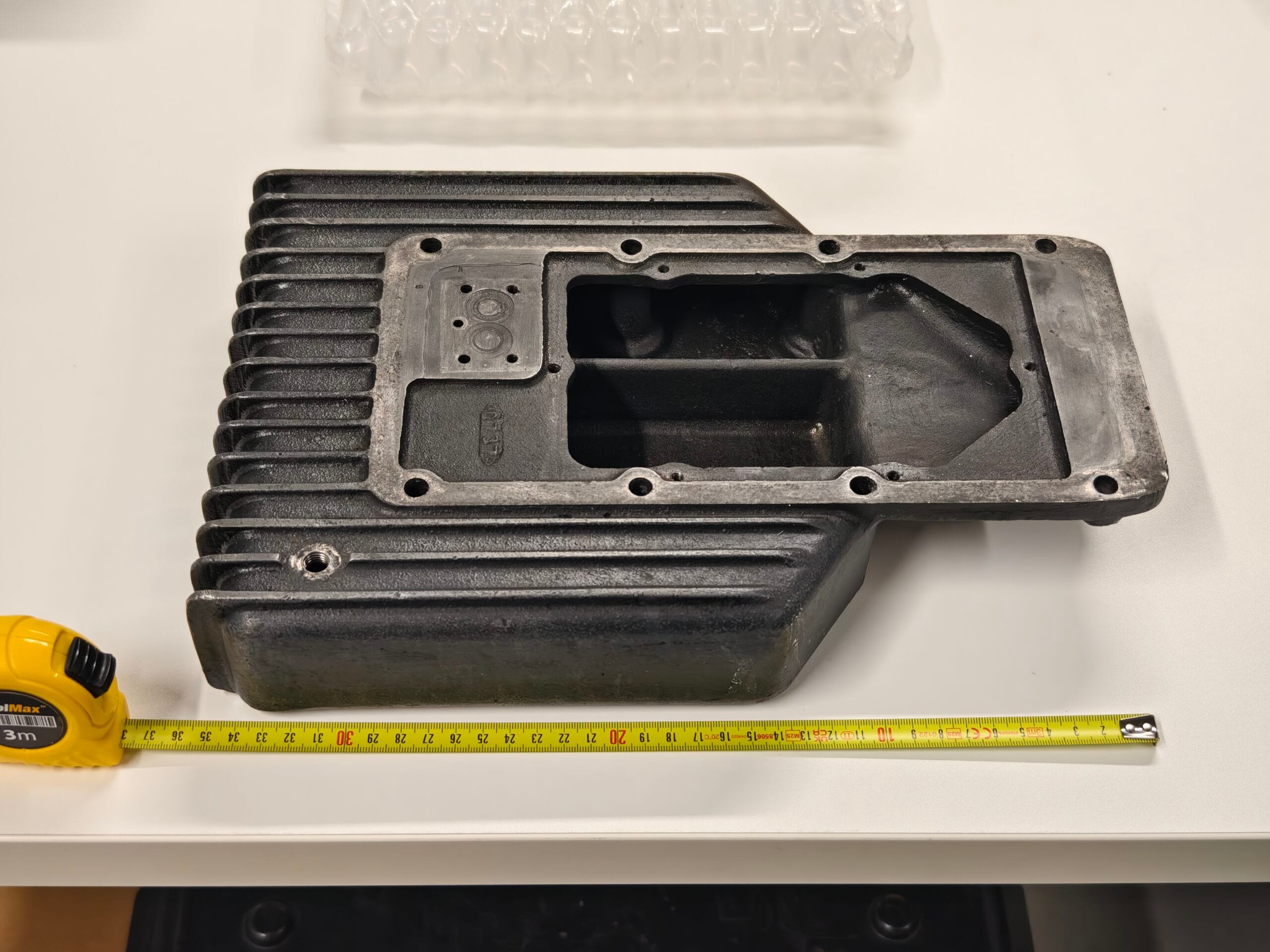
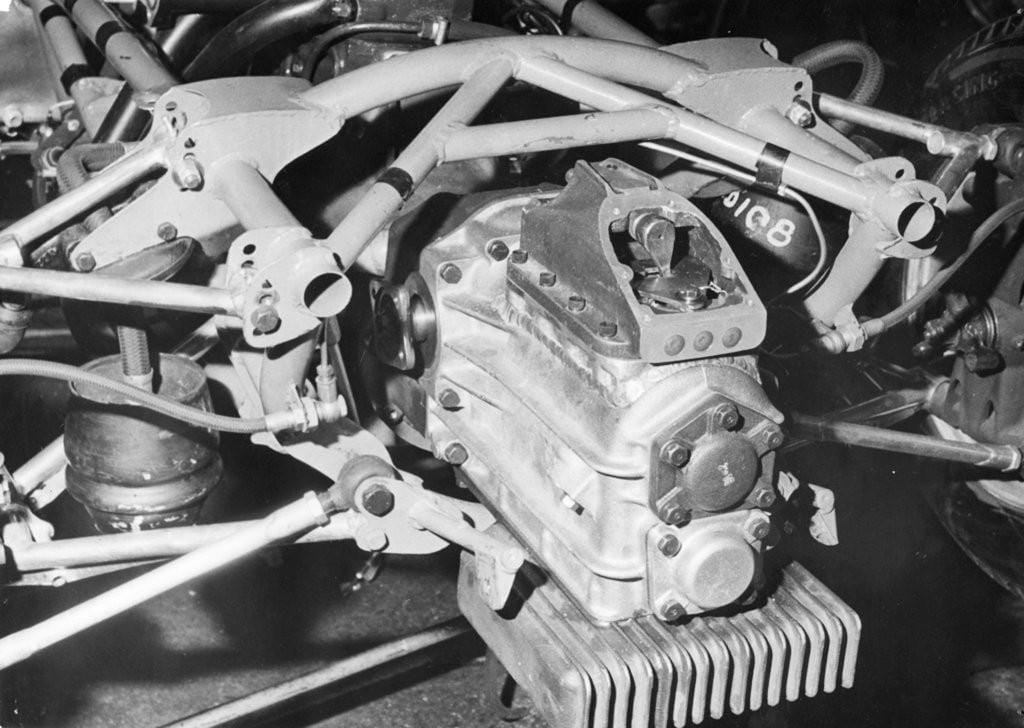
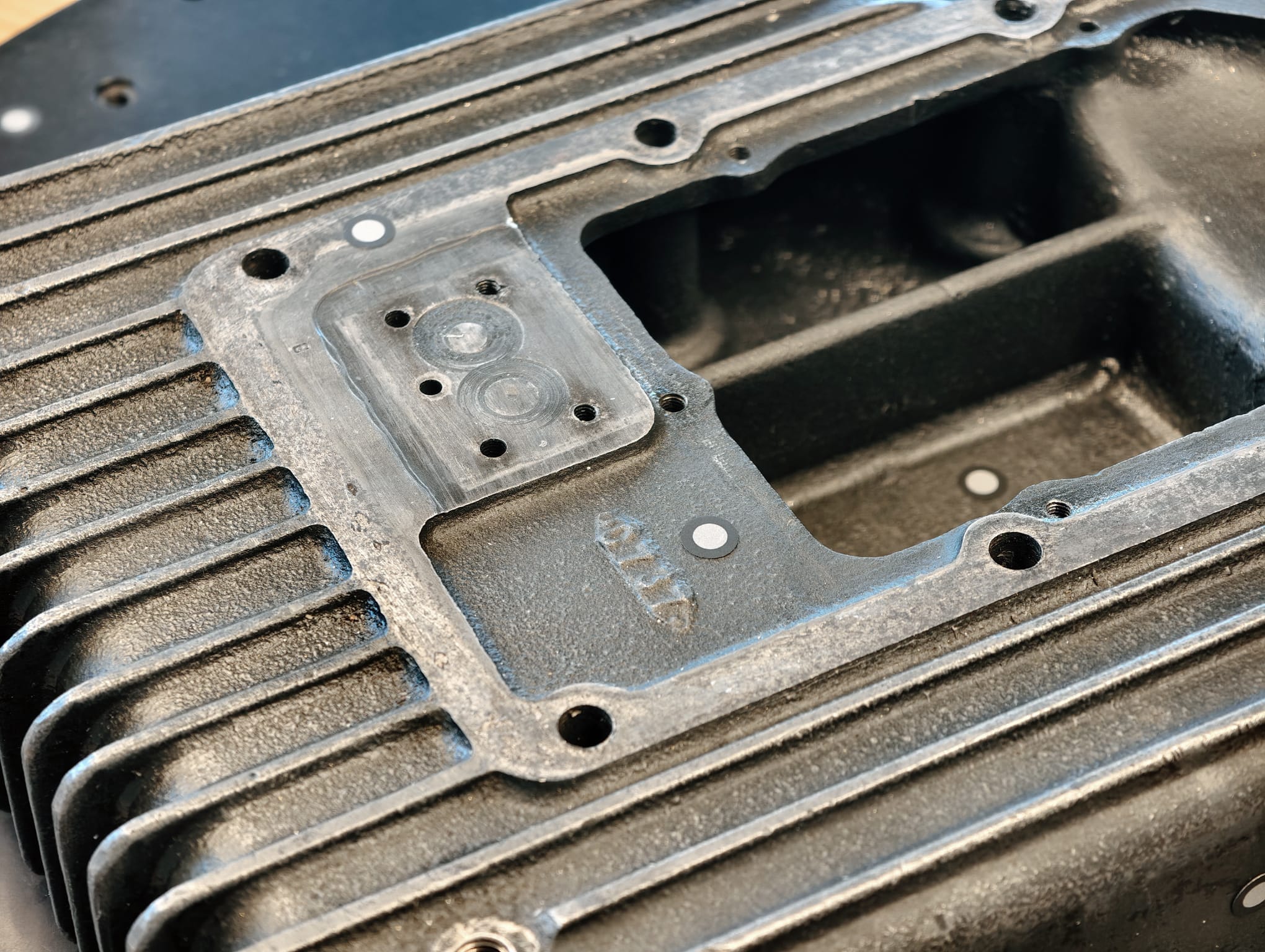
A unique race car needs a part that is no longer available anywhere in the world. For De Bruyne Motorsport & Engineering, this was the reality with the transmission pan of their 1963 Cooper T65: a prototype Formula Junior race car that is still active on international classic racing circuits. Using a combination of optical 3D scanning, X-ray CT scanning, and reverse engineering, we built a complete digital twin, ready to be put back into production if necessary, all within a turnaround time of two business days.
Project at a glance
| Customer | De Bruyne Motorsport & Engineering (dbme.be) |
| Application | Reverse engineering the transmission pan of a Cooper T65 (1963) |
| Component | Magnesium alloy oil pan, approx. 50 x 25 x 5 cm, with internal pockets |
| Challenge | Part no longer available worldwide; digital twin needed within a short timeframe between two international matches |
| Scanning technology | Optical 3D scanning (Scanology KSCAN-E) + X-ray CT scanning (Comet Yxlon FF35) |
| Reverse engineering | Geomagic Design X |
| Validation | ZEISS Inspect |
| Output | Complete CAD model in STEP format |
| Lead time | 2 business days |
The customer’s question
The Cooper T65 is a prototype from the final season of Formula Junior, designed by the Cooper Car Company in 1963. There are only a handful of similar cars on the track worldwide, and specific parts such as the magnesium alloy transmission pan are no longer available as new parts. For De Bruyne Motorsport & Engineering, which fields this car in active competition, that means: a single instance of damage to this part puts the entire race program at risk.
The request was clear: digitize the oil pan into a post-processed STEP file so that a digital twin would be available for future reproduction via CNC machining, casting, or additive manufacturing. The window of opportunity during which the part could be disassembled was limited to a short period between two international races. The car had to be back on the road quickly.
Our approach
For this project, we combined two scanning techniques to fully capture both the exterior and the hard-to-reach interior. Together, these two datasets formed the basis for the reverse engineering process. Thanks to this combined approach, the entire scanning process was completed in a single workday. The greatest benefit for the customer: as soon as the scans were ready, the part could be returned immediately. After all, from that moment on, we have 100% of the data needed for the rest of the process. In practice, customers sometimes simply drop off their part, have a quick cup of coffee with us, and take it back home with them when they leave.
Day 1, Step 1. Optical 3D scan using the Scanology KSCAN-E
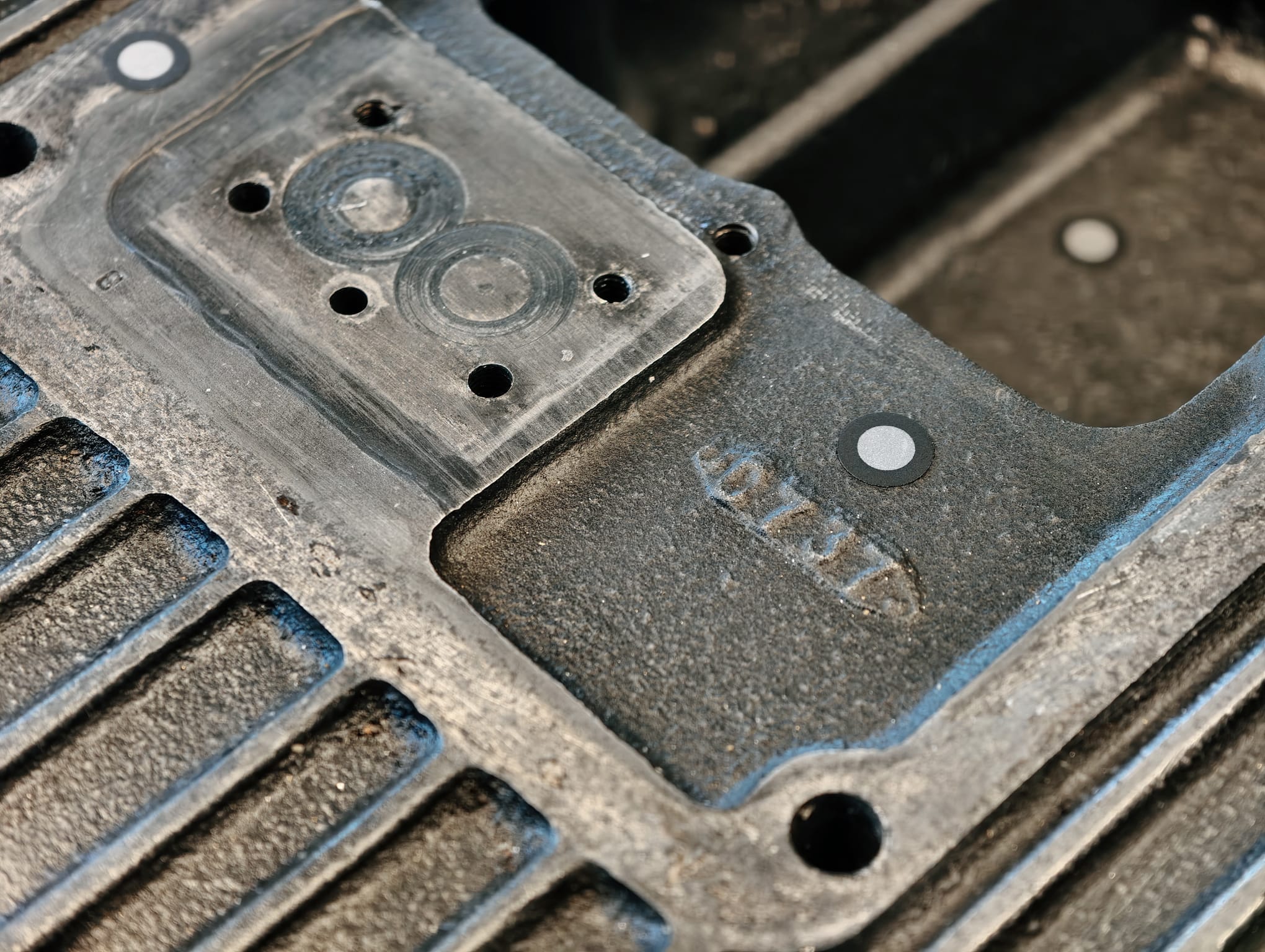
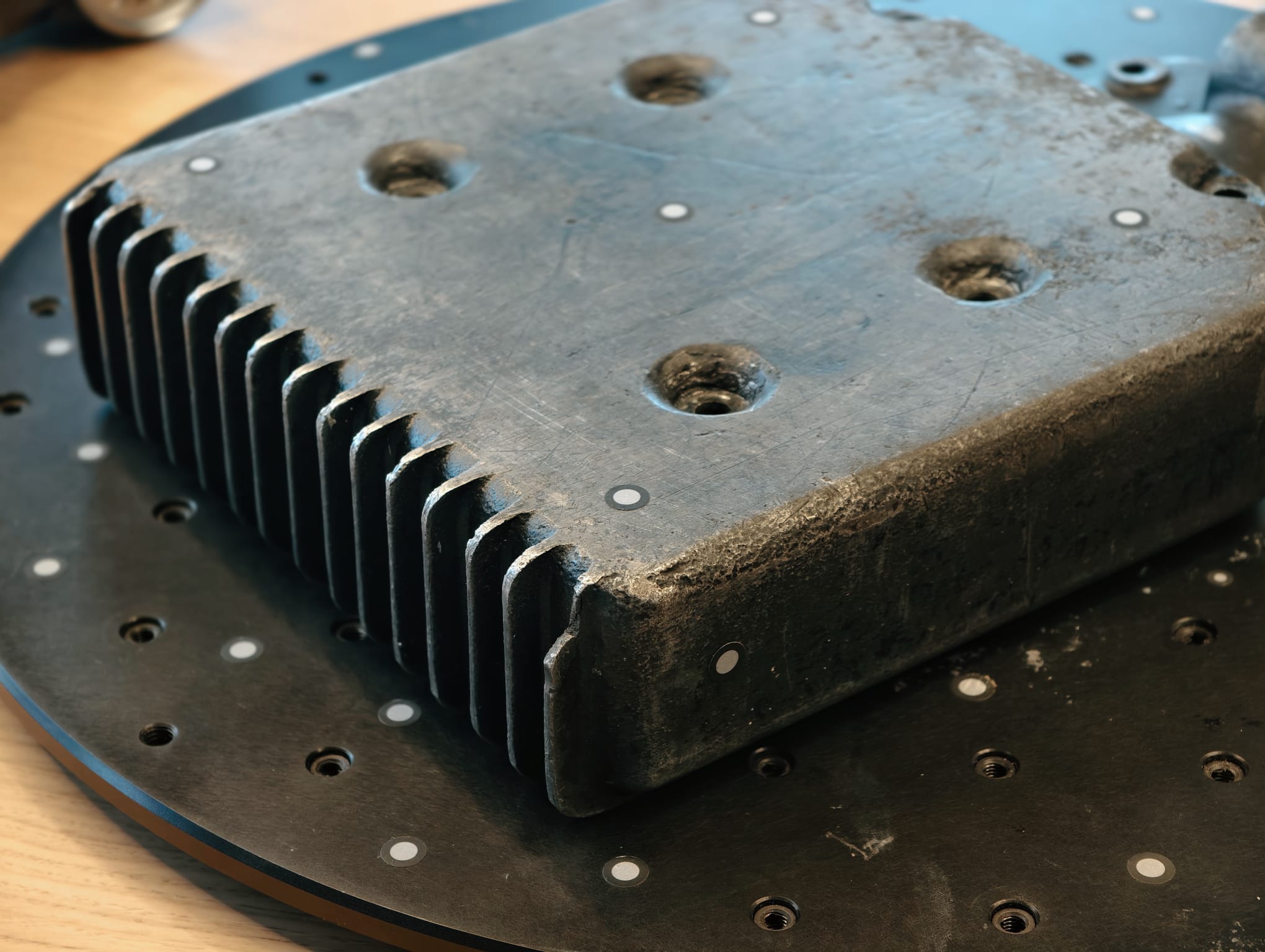
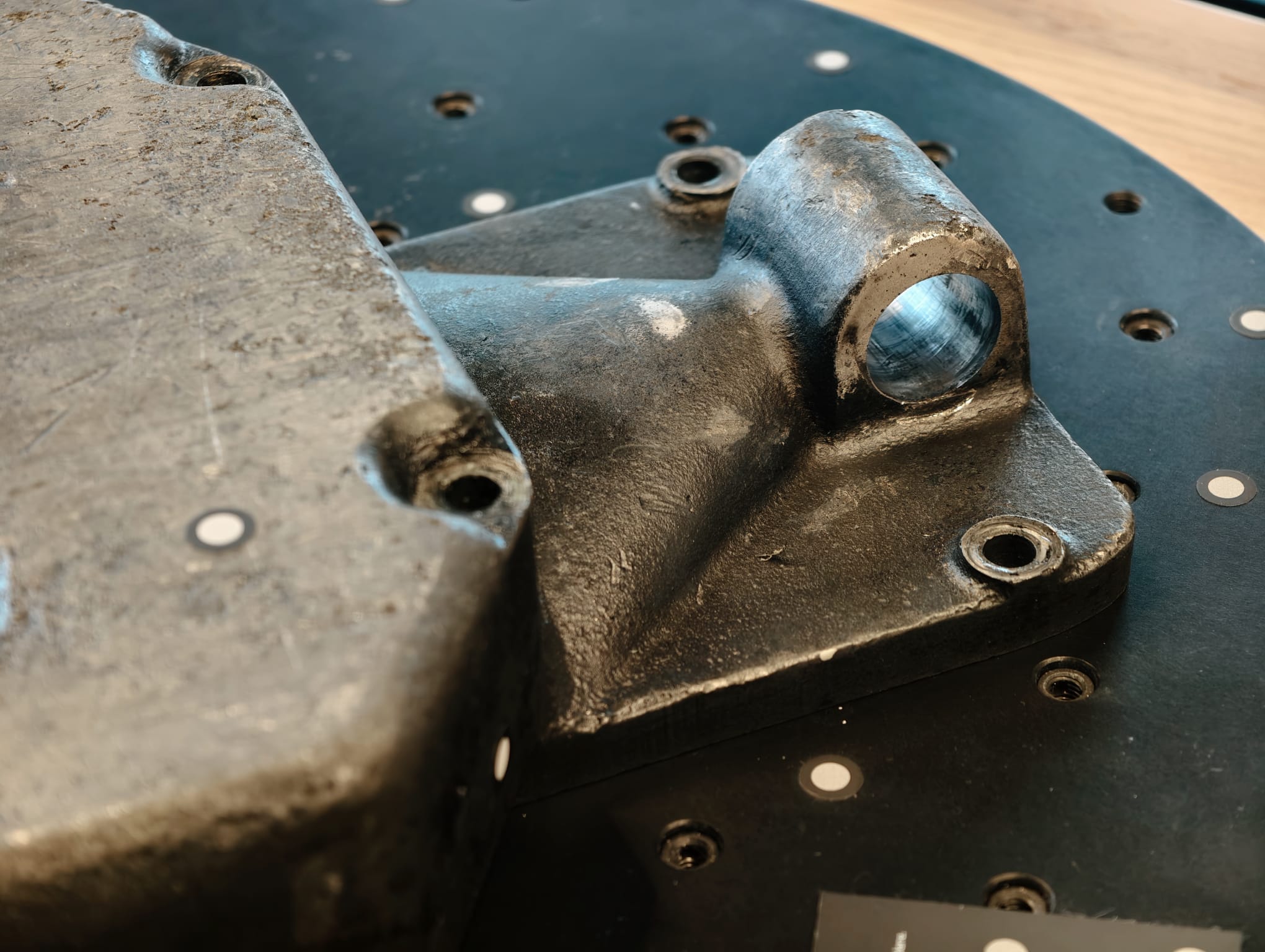
We scanned the exterior of the oil pan using our Scanology KSCAN-E, a wireless handheld 3D scanner that uses laser light. This scanner is compact, fast, and achieves an accuracy of approximately 0.020 mm, making it ideal for parts of this size. Within minutes, we had a rich and reliable point cloud of the entire outer surface.
Day 1, Step 2. X-ray CT scan using the Comet Yxlon FF35
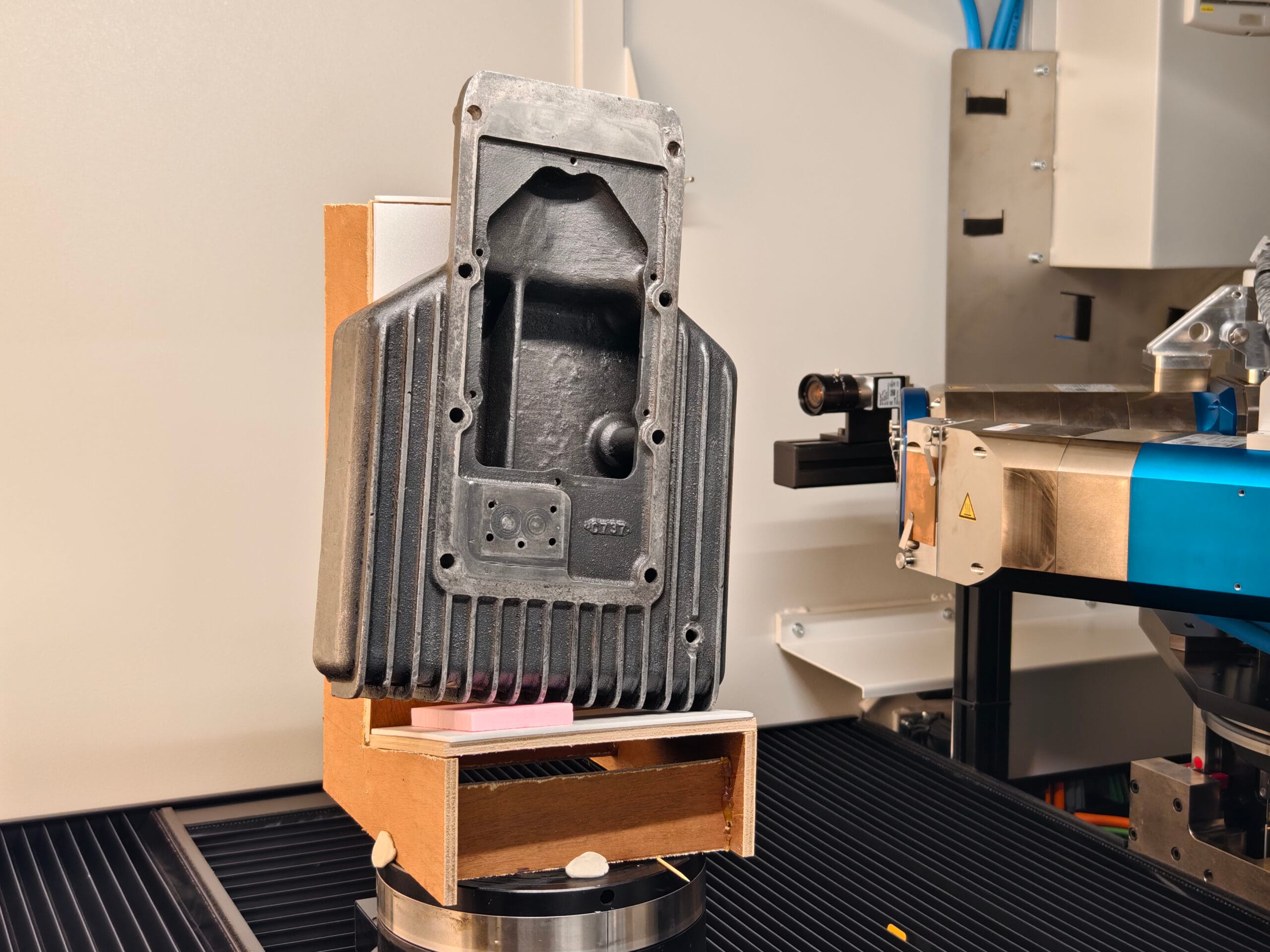
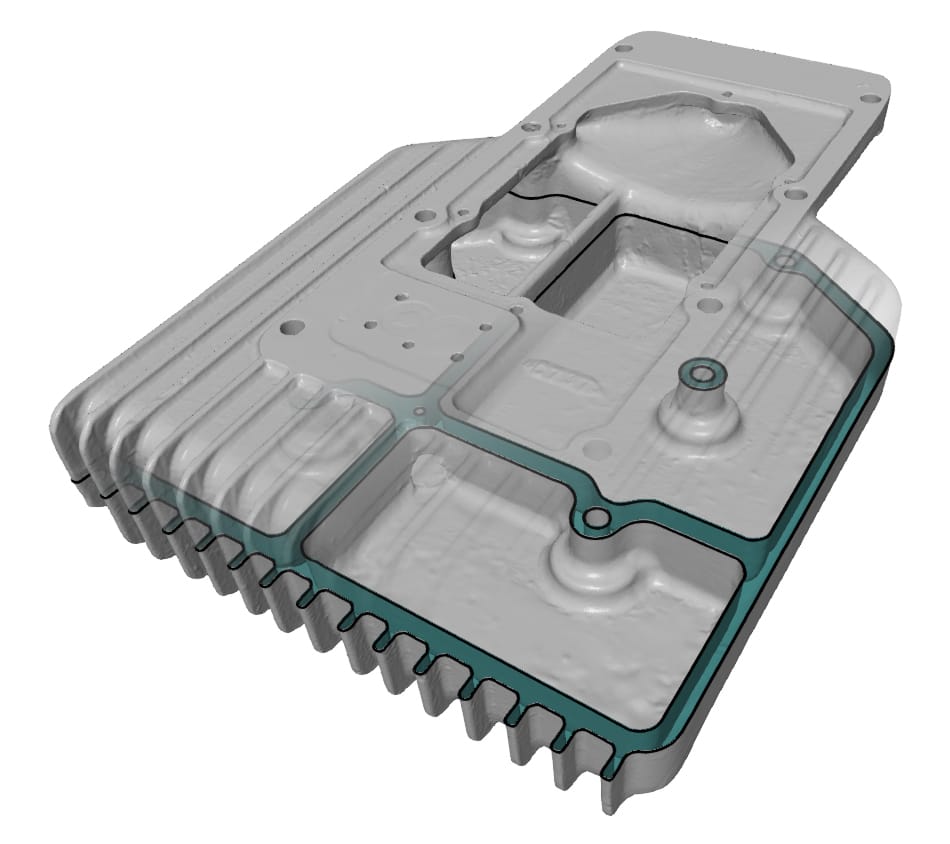
For the interior of the part, we used our Comet Yxlon FF35, our latest industrial CT scanner. With a part measuring 50 cm in length and featuring internal pockets, this is exactly the type of part the FF35 is designed for: its size and flexible dual-tube configuration make it possible to capture larger parts in a single scan, regardless of whether we’re dealing with lightweight materials like magnesium or heavier metals like titanium and steel.
The major advantage of CT scanning in this context is that you get 100% of the part’s data—both internal and external—without damaging the original in any way. For a one-of-a-kind piece that cannot be replaced, this is not a luxury but a necessity.
Day 1, Step 3. Merge the two datasets
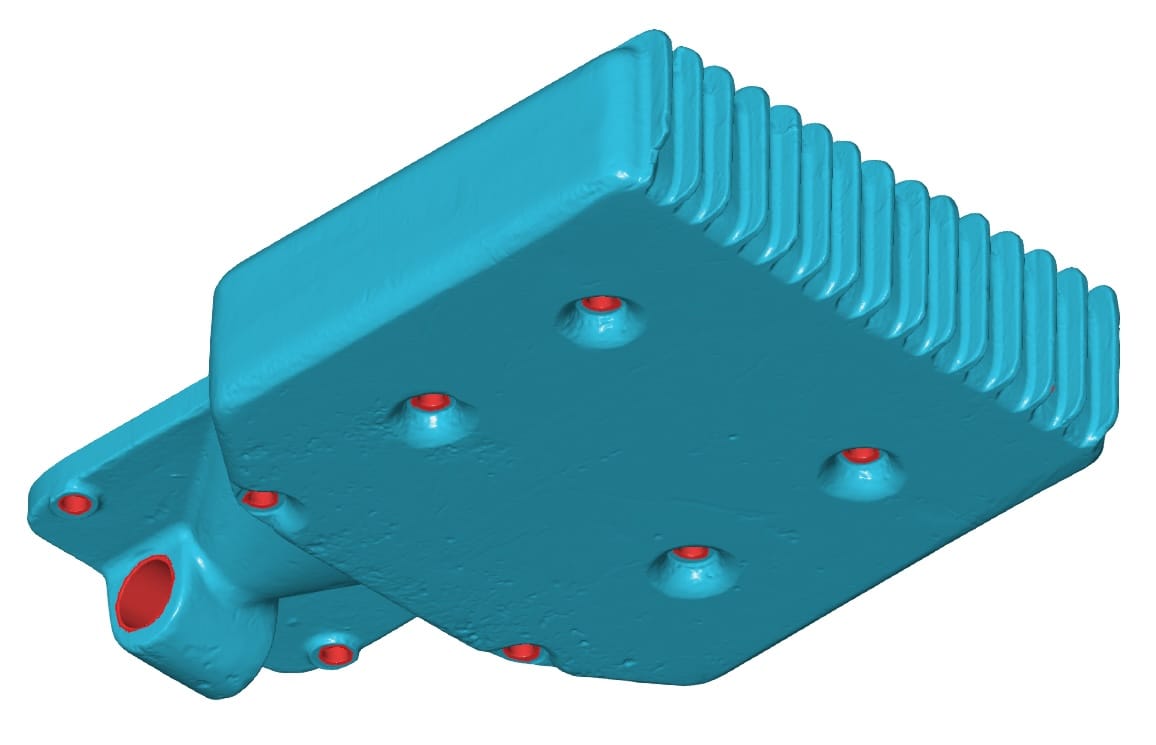
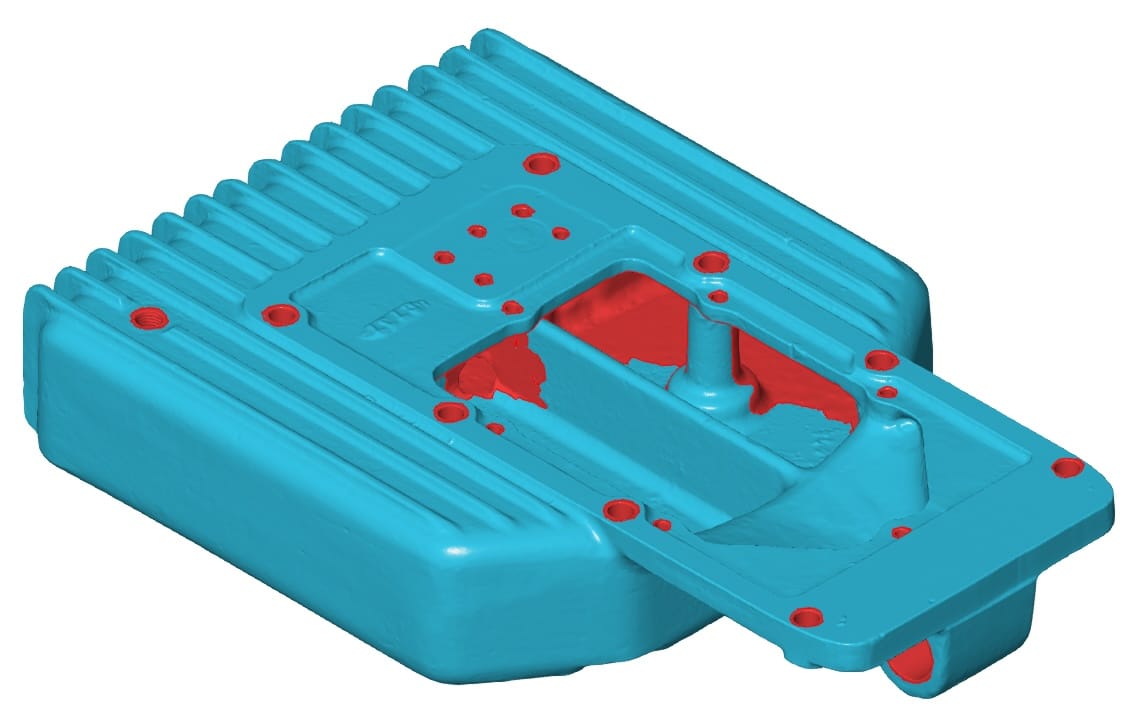
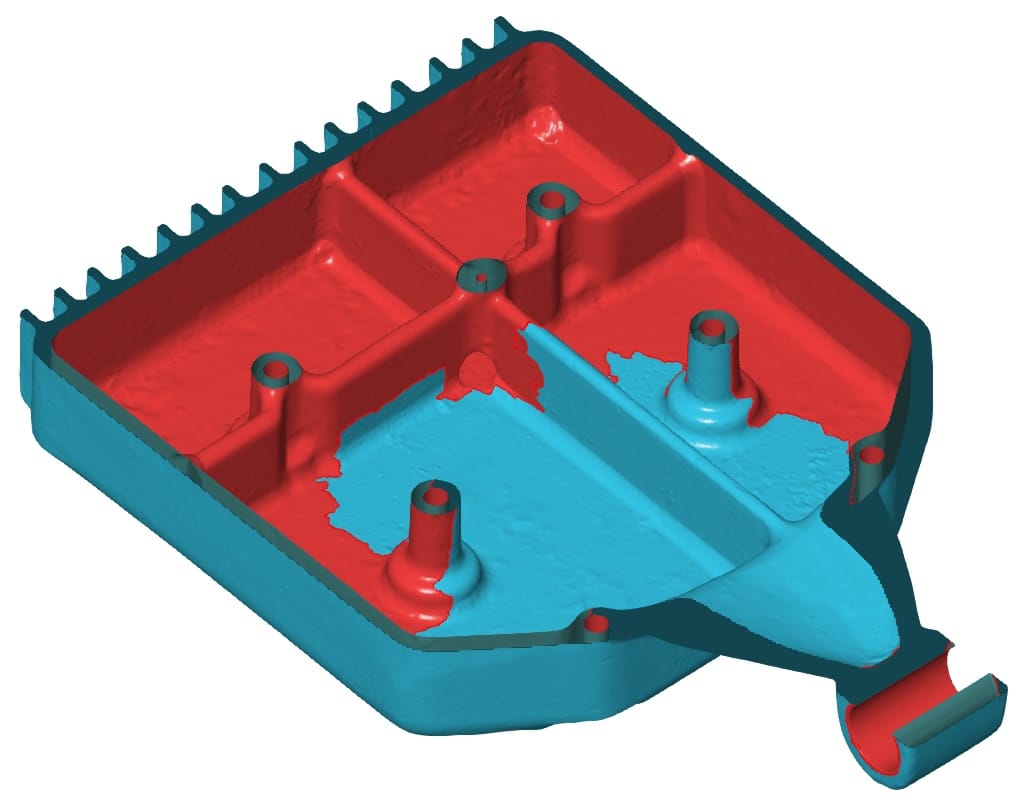
In the next step, we superimposed the optical scan and the CT scan and merged them into a single, complete dataset. In the visualization below, the optical scan is shown in blue and the additional data from the CT scan in red. The result is a complete 3D representation showing all external surfaces and all internal features. With this combined dataset, the part was able to be returned to the customer at the end of day 1.
Day 2, Step 4. Reverse engineering with Geomagic Design X
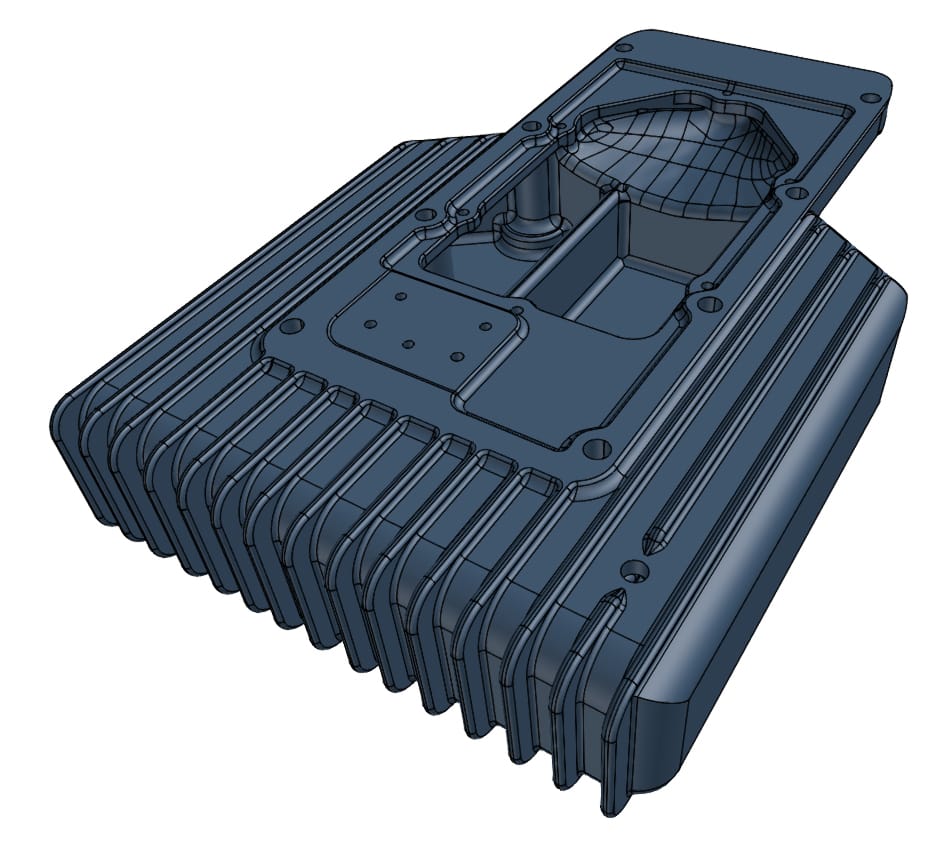
On day 2, we began the reverse engineering process based on the combined scan. For this, we used Geomagic Design X, which serves as the bridge between scan data and traditional CAD software. Step by step, we divided the mesh into its basic shapes and reconstructed it according to general design principles (perpendicularity, concentricity, parametric features) without deviating too far from the original geometry.
Day 2, Step 5. Validation in ZEISS Inspect
Finally, the CAD model was validated in ZEISS Inspect against the original scan data. For us, this is the standard final step in every reverse a project. A color plot immediately highlights any potential discrepancies, and the accompanying report documents the specific decisions made during the reverse engineering process (such as smoothing out wear or manufacturing variations). In this way, the customer not only knows that the CAD model is correct, but also why certain regions deviate from the scan.
The result
De Bruyne Motorsport & Engineering now has a complete and validated CAD model in STEP format—a digital twin of the Cooper T65’s unique transmission oil pan. This file can be reused at any time for:
- Reproduction of the part via CNC machining, casting, or 3D printing.
- Changes to the design, such as those made to optimize materials or reinforcements.
- Documentation and archiving of a component that is no longer available in this form.
What began as a last-minute request resulted in a future-proof solution in just two business days. The Cooper T65 can now remain in competition, with the assurance that the geometry of its unique oil pan has been fully and accurately documented.
Why this combination of techniques works
Optical 3D scanning and X-ray CT scanning are complementary, not alternatives. An optical scan is extremely fast, high-resolution, and excellent for capturing external geometry. CT scanning, on the other hand, is the only technique that allows you to non-destructively map internal cavities, pockets, and hidden features. Combining both datasets creates a measurement set that cannot be achieved using either technique alone.
For reverse engineering projects involving unique or historical parts, that difference is crucial. The original often cannot be damaged, and there is usually no second chance to scan the part.
A similar project?
Do you work with classic cars, prototypes, or unique parts for which CAD data is no longer available? We’d be happy to help. Contact us at info@tetravision.be or +32 16 91 04 20. We always respond within 24 hours.