- Fast, Accurate, and Reliable
3D Scanning Service
Are you looking for a 3D scanning service for precise and high-quality digital measurements?
At TetraVision, we offer advanced optical 3D scanning for a wide range of applications in industry, product development and quality control. Thanks to our state-of-the-art technologies, we can quickly and accurately digitize objects of various sizes and materials. We provide this service both in our measurement lab and on-site.
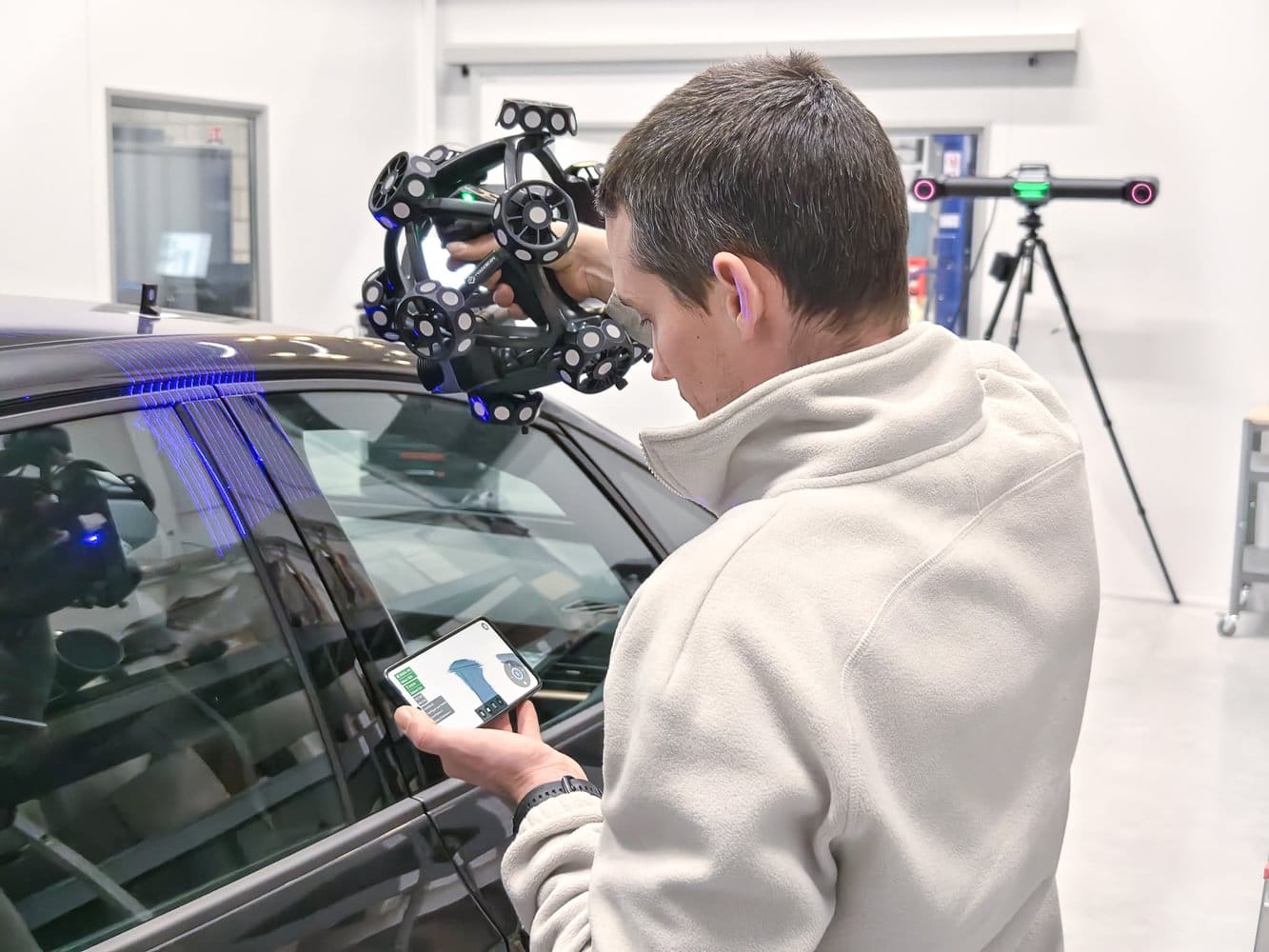
General
Our 3D scanning solutions assist businesses with reverse engineering, prototyping, machine construction and component inspection. With an accuracy of up to one-hundredth of a millimetre and an efficient workflow, we ensure that you receive detailed and usable 3D models.
Our service is ideal for scanning a single product, but with our automated measurement cell, we can also efficiently digitize large series or batches.
Rely on TetraVision’s expertise and discover how our optical 3D scanning service can elevate your project to the next level.
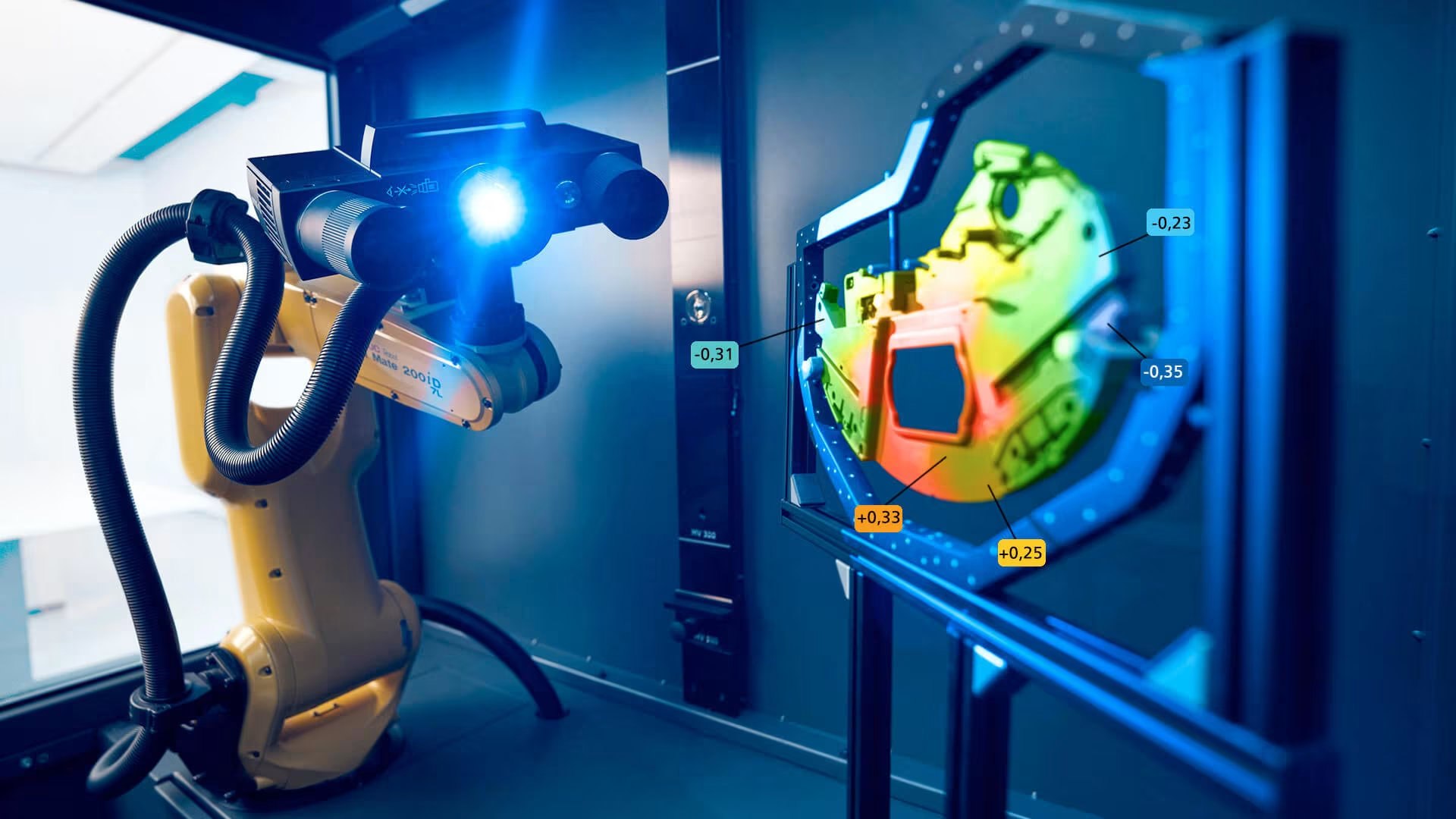
Structured blue light scanner
A projector casts a pattern of stripes onto the surface of the part. Cameras register the deformation of this pattern, from which a detailed 3D point cloud is calculated. This method achieves a very high level of accuracy.
We primarily use this technology in our lab, and it is suitable for both precision parts and series inspections. When sufficient geometry is present, no reference points are needed. A tripod or robot is required.
Systems: ATOS Triple Scan (8M cameras, mobile deployment) and ATOS Q in ScanBox 4105 (12M cameras, automatable).
By simply switching lenses, comparable to a photo camera, we adapt the measurement volume to the part size. A wide-angle lens provides an overview, while a zoom lens captures the smallest details.

Handheld 3D scanner
A bundle of laser lines is projected onto the object. A camera measures the angle between the laser and the reflection, after which the depth is calculated via triangulation. This technology is fast, wireless, mobile and versatile: only a laptop is required.
Ideal for inspection, quality control and reverse engineering of small to large parts. With laser line scanners, the level of detail for the project can be determined in advance, ensuring optimal efficiency.
Systems: KSCAN-E (scanning area up to 1440 x 1000 mm, 6 scanning modes), SimScan-E (compact, wireless, ideal for deep holes and hard-to-reach areas) and KSCAN-X (large scanning area up to 2.6 x 1.8 m, suitable for medium to large parts).
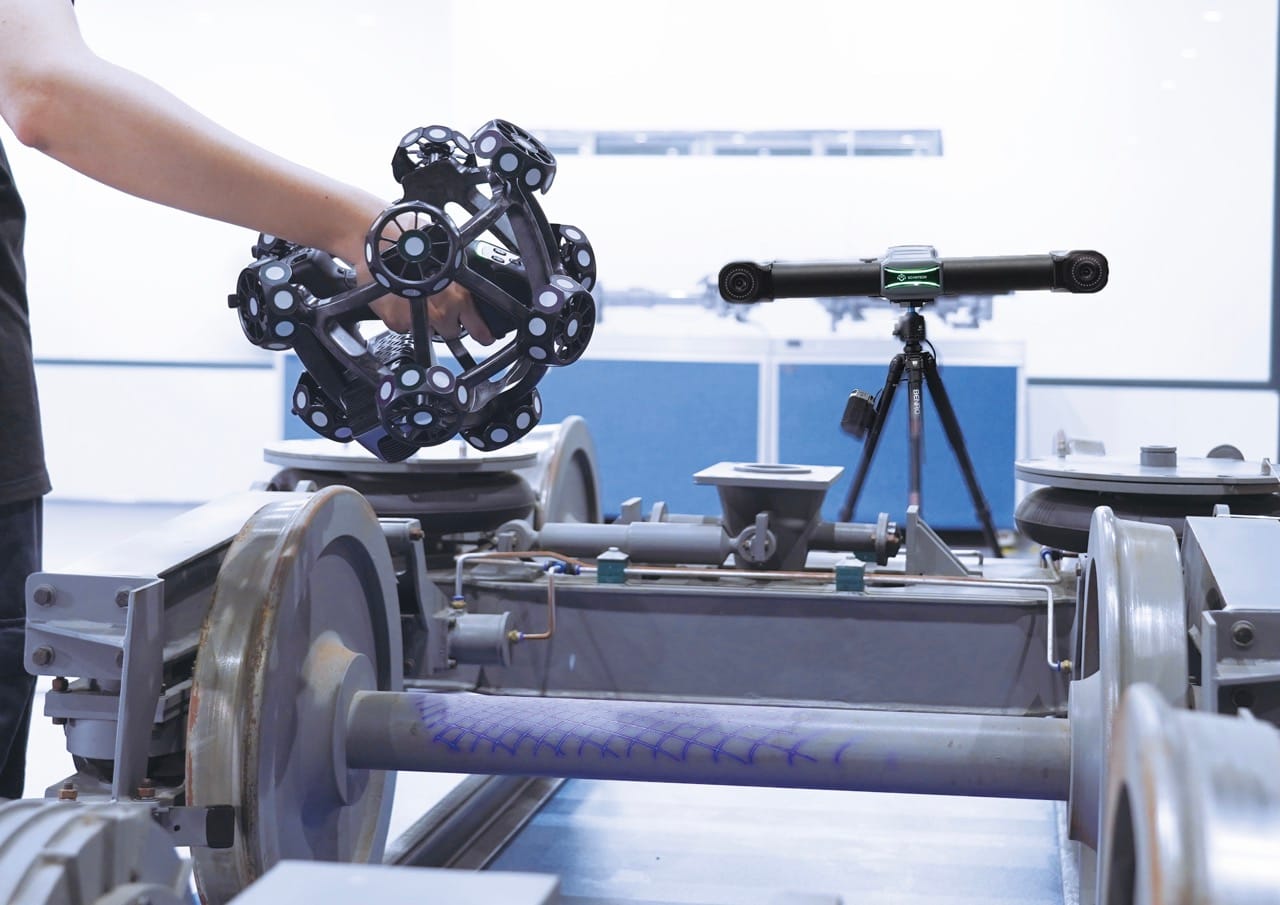
Tracking 3D scanner
Based on the principle of the handheld 3D scanner, but with a separate tracker that actively tracks the scanner. This enables real-time wireless measurements, even on moving parts. The tracking system requires no markers.
Particularly suitable for large structures that cannot be moved, and for environments where flexibility and range are crucial.
Systems: TrackScan Sharp-S (up to 8.5 m tracking distance) and NimbleTrack-E Gen2 (up to 4.2 m tracking distance).

Quick visual inspection
The actual-to-nominal comparison option allows a very quick and visual inspection. Deviations between the physically produced piece compared to the CAD data can be seen at a glance.
Furthermore, it is also possible to perform a small series check and compare pieces with each other. One of the reasons why this technology is so popular within the injection moulding industry.
Moulds can be adjusted, materials can change… the smallest (process) change can have a major impact on the final result.
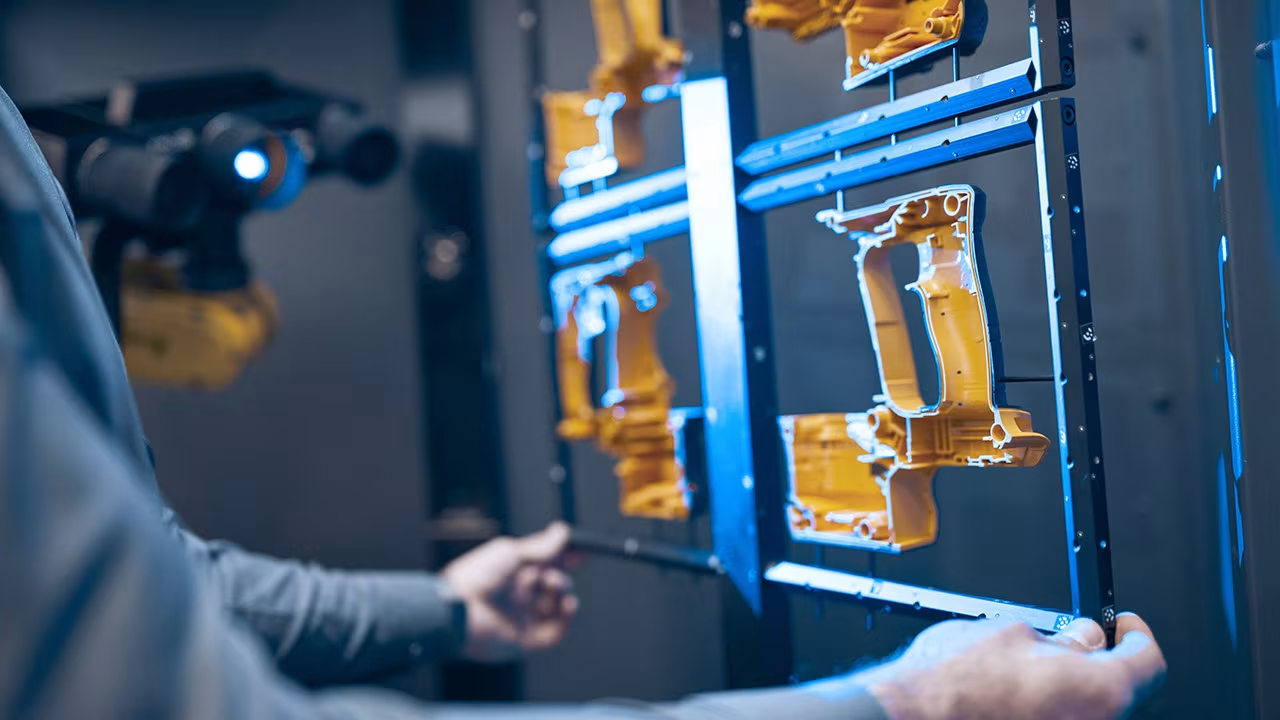
Serial measurements
Thanks to the use of dedicated fixtures, multiple parts can be scanned simultaneously. This combined with partial automation ensures cost- and time-efficient measurement.
This technology is therefore highly suitable for controlling serial productions. Think of:
- Golden samples
- Prototyping/Pre-production inspection
- SPC (Statistical Process Control)
- Small series
- Final inspection
- …
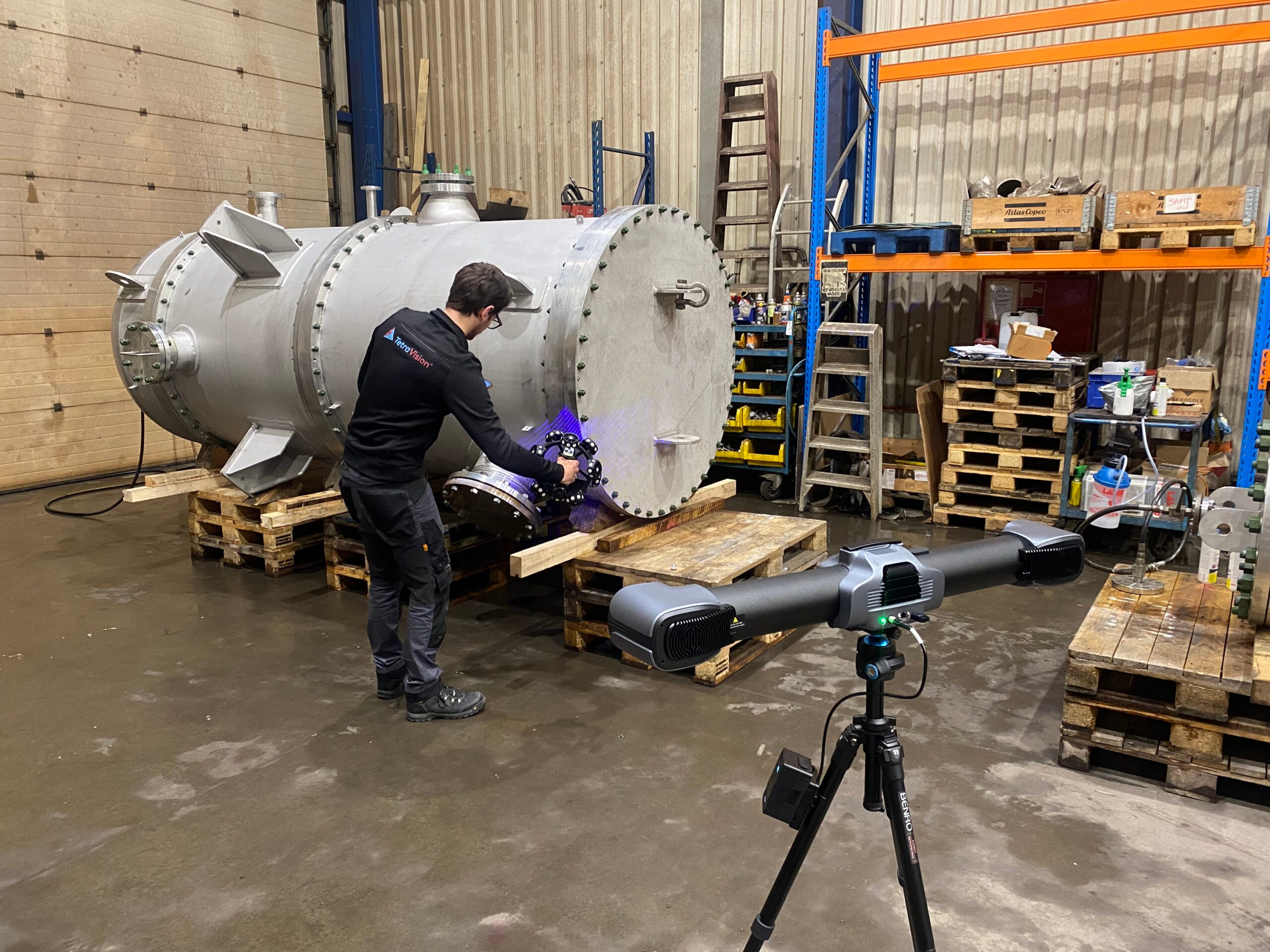
Onsite measurements
In addition to the systems we use exclusively in our lab, we also have several mobile scanners available. This allows us to perform measurements on-site. For instance:
- Production lines temporarily shut down and requiring on-site measurements.
- Larger silos or engines of parts that are immovable and still require some inspection.
- Automotive fixtures.
- Measurements of cars, motorcycles, small planes,…
- Statues and other art objects.
- …
Our cases
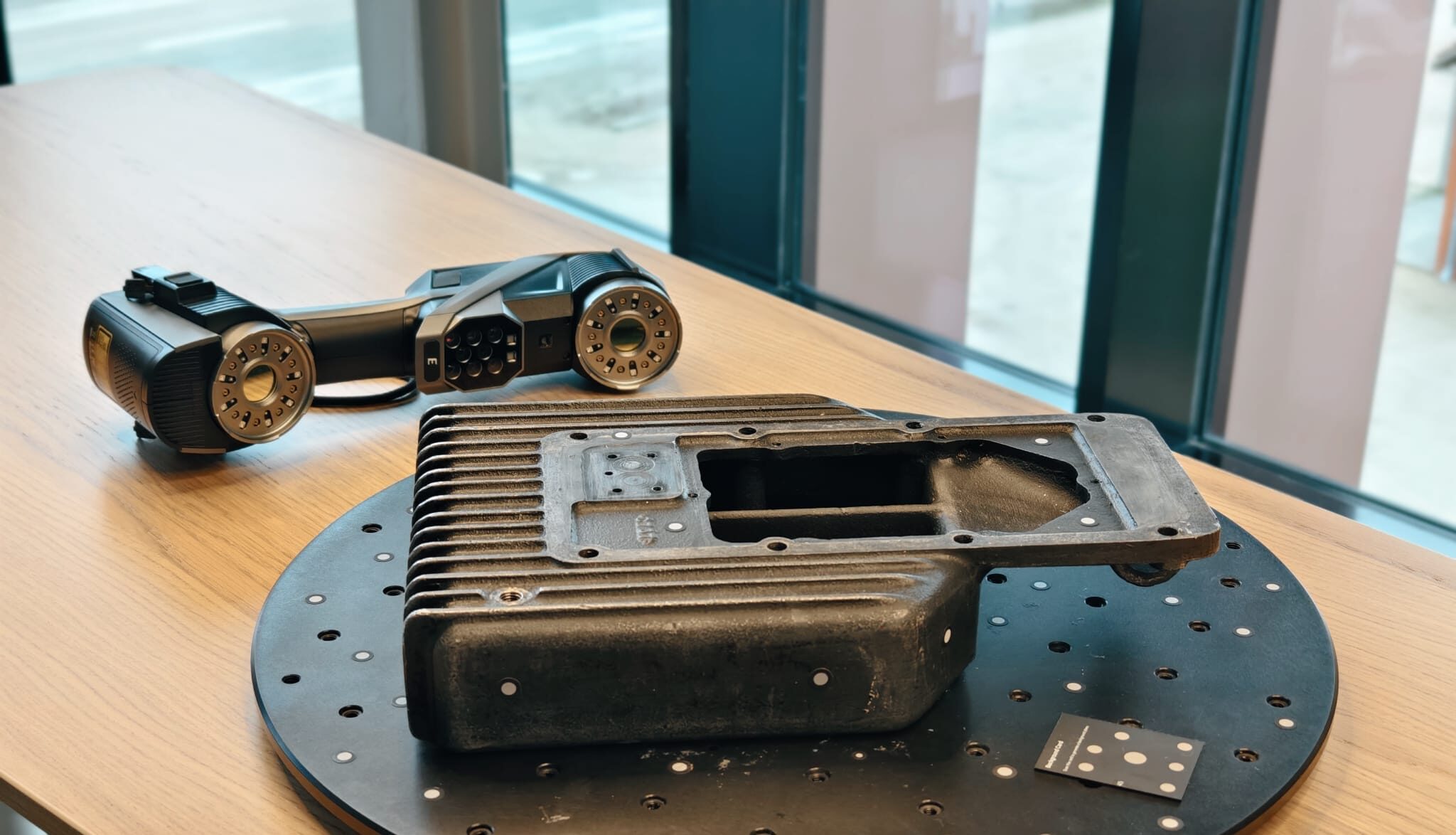
- Optical 3D scanning ,
- Reverse Engineering ,
- Xray CT scanning
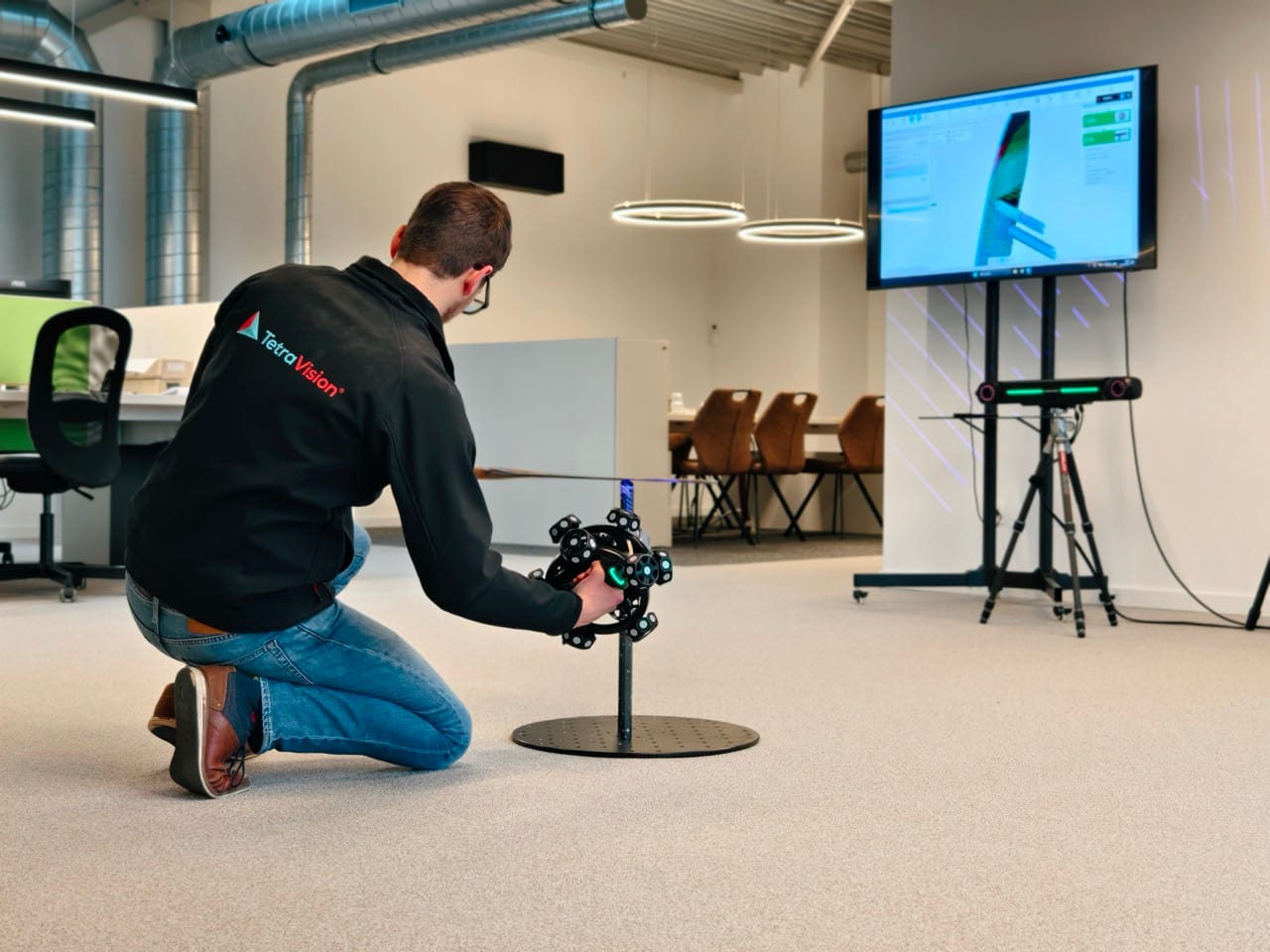
- Optical 3D scanning ,
- Reverse Engineering
Want to know more about Tetravision?
Please contact us here. We always respond within 24 hours.
Our experts are at your service

Sofie Rasschaert
Technical Account Manager

Jurgen Van Donink
3D Metrology Expert & CEO

François Justin
3D Metrology Expert & CTO
Frequently asked questions about
3D Scanning Services
What is a 3D scanning service?
A 3D scanning service is a professional service where physical objects are digitally captured using optical 3D scanners or X-ray CT scanners. The result is an accurate 3D model (mesh or point cloud) that you can use for quality inspection, reverse engineering, 3D printing, or inspection. At TetraVision, we perform 3D scans in our ISO 17025 accredited measurement lab or at your location.
What accuracy can I expect from a 3D scan?
The accuracy depends on the size of the object to be scanned and the scanning technology used. Our structured blue light scanners achieve a measurement uncertainty of 0.01 mm to 0.05 mm and are the most accurate for precision parts. Laser line scanners offer a measurement uncertainty of ± 0.02 mm + 0.015 mm/m and are particularly suitable for medium to large parts. Our tracking system achieves a measurement uncertainty down to ± 0.025 mm over distances up to 8.5 m. For parts smaller than 50 mm, we achieve an accuracy of approximately 0.005 mm or better. Our scanners are certified according to the international VDI/VDE 2634 Part 3 standard. See our FAQ for a full overview per object size.
What file format will I receive after a 3D scan?
The standard output is an STL file (mesh built from triangles). We can also export to G3D, POL, PLY, OBJ, 3DS, WRL, or JT. Do you need a CAD file in STEP, IGES, or Parasolid? Then an additional reverse engineering step is needed where we convert the scan to an editable CAD model.
Can TetraVision also scan on location?
Yes. In addition to our measurement lab in Boutersem, we have various mobile scanners for on-site measurements, ranging from small handheld 3D scanners to very large tracking systems. This is ideal for large objects that cannot be moved, production lines that are temporarily shut down, or parts in the automotive and mechanical engineering sectors. Contact us for a customized quote.
What is the difference between optical 3D scanning and CT scanning?
With optical 3D scanning, we capture the external geometry of an object. Within this, we use different technologies: structured blue light for maximum accuracy on precision parts, laser line scanners for fast and mobile measurements, photogrammetry as a basis for large structures, and tracking systems for real-time wireless measurement over large distances. X-ray CT scanning goes a step further: it also maps the internal structure, such as porosity, internal defects and hidden features. CT scanning is non-destructive and delivers 100% data, both internal and external.
We also frequently use CT scanning when, for example, we only need to scan the outside of plastic parts. The major advantage is that we can scan multiple samples simultaneously. Our experience is that when we can combine 4 parts in 1 scan, CT scanning becomes cheaper than optical scanning. With, for example, 100 samples at once, CT becomes unbeatable in terms of price.
Depending on your part and specific question, we advise which method is most suitable.
Can you perform series measurements?
Yes. Thanks to our automated measurement cell and specific fixtures, we can scan multiple parts simultaneously. With CT scanning, we can often scan multiple objects together in 1 scan as well. This makes series measurements cost and time efficient. Think of golden samples, pre-production inspection, SPC measurements, and final inspections. Also visit our quality inspection page for more information about measurement reports and inspection options.
How quickly are results delivered?
Our standard lead time for a 3D scan is approximately 5 working days. Depending on the complexity of the project and any accompanying reporting, this may vary. Contact us for a concrete estimate, we always respond within 24 hours.
What does it cost to have a 3D scan made?
The price depends on the type of object, the desired accuracy, the number of pieces, and any additional services such as reverse engineering or a detailed measurement report. We create a customized quote for each project. Request your quote here, you will receive it within 24 hours.
What can I do with the results of a 3D scan?
The applications are broad. You can use the scan data for quality inspection (actual-to-nominal comparison, GD&T analyses), reverse engineering (conversion to CAD model), 3D printing, product validation, or visual inspection. We also always provide a free ZEISS Inspect viewer file so you can view the results in 3D yourself.
Is TetraVision accredited?
Yes. TetraVision has held an ISO 17025 accreditation since late 2023, granted by BELAC (Belgian Accreditation Body). This guarantees that our measurement results are reliable, accurate, and traceable. ISO 17025 goes beyond ISO 9001: it also assesses the technical competence of our lab and our measurement technicians.
What industries is 3D scanning suitable for?
Our 3D scanning service is used in various sectors, including automotive, healthcare, packaging industry, additive manufacturing, and injection molding. Whether it’s a single prototype or series production, we adapt our approach to your specific situation.
Can all materials and surfaces be scanned?
Optical 3D scanners work excellently on most materials and surfaces. Transparent, highly reflective or very dark surfaces pose a challenge, because the light is not reflected correctly.
This is especially the case for structured light scanners, but less so for laser line scanners.
Should it still be a problem, the solution is straightforward: a scanning spray applies a thin, temporary layer that ensures optimal reflection.
For parts with hidden or internal geometry that is not optically accessible, we switch to X-ray CT scanning or work with a plastiform cast.
Why do you use different scanning technologies?
Every part and every application requires a different balance between accuracy, speed and range. We scan a small precision part with our structured blue light scanners for maximum detail. A large industrial structure is tackled with a tracking 3D scanner. By choosing from multiple technologies, we find the most efficient approach for every project.

