No two measurement challenges are the same. A long shaft requires a different approach than a printed circuit board, and a large cast part presents different challenges than a small injection-molded part. That’s why, for every industrial CT scan, we carefully select the scanning strategy that best suits your part and your specific needs. Our Comet Yxlon FF35, the latest CT scanner in our lab alongside the ZEISS Metrotom 6 Scout, offers a comprehensive suite of scan modes for this purpose. In this blog, we explain the available strategies, when we use them, and what benefits they provide for you: shorter turnaround times, higher resolution, or a larger measurement volume, depending on your application’s needs.
Why the scanning strategy makes all the difference
In industrial CT inspection, a part’s dimensions, geometry, and material composition determine how well a standard scan works. In practice, we regularly encounter situations where a standard approach falls short:
- Large or long parts that do not fit entirely within a single standard scan volume.
- Complex geometries that require higher resolution.
- Productieomgevingen waar een korte scantijd essentieel is.
- Components that cannot be positioned perfectly centered.
- Flat components such as PCBs, batteries, and microelectronics that require a customized scanning method.
The FF35 has a suitable scan mode for each of these challenges. Below, we’ll go through them one by one. For each measurement question, we first ask ourselves: Why do you want to measure this? The answer helps determine which strategy we choose.
Circular Scan: Quick and Quality
The circular scan forms the basis of most CT inspections. The part is positioned in the center and rotates around its axis of rotation while the X-ray projections are collected. Within this basic procedure, we choose between two modes.
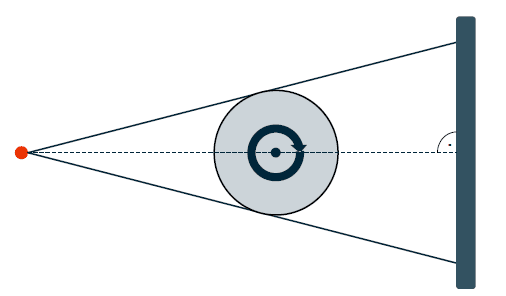
Quick
In Quick mode, the component rotates continuously while the projections are recorded. This results in:
- Shorter scan time.
- Higher productivity.
- An ideal approach for routine inspections.
Quality
In Quality mode, the component operates on a stop-and-go principle: for each projection, the rotation stops briefly before an image is captured. This results in:
- Maximum image quality.
- Less motion blur.
- The right foundation for accurate defect analysis and metrology.
This choice between speed and maximum quality is reflected in most of the strategies listed below: ScanExtend, HeliExtend, and HeliExtend Dual are each available in both a Quick and a Quality version.
ScanExtend: a larger measurement volume
When a component is wider than the standard scanning field, we use ScanExtend. This technique increases the CT scanner’s horizontal field of view, allowing larger components to be captured in full.
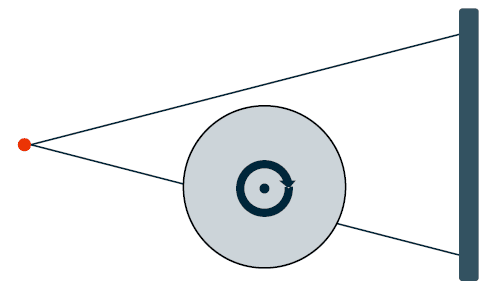
Advantages:
- Increased measurement volume.
- Higher achievable resolution.
- Inspection of larger parts becomes possible.
- Vertical expansion is also possible for objects that extend beyond multiple scan volumes.
In practice: We scan a large-diameter cast aluminum housing in separate sections and then digitally assemble them into a single, high-resolution volume.
HeliExtend: Long Parts in a Single Scan
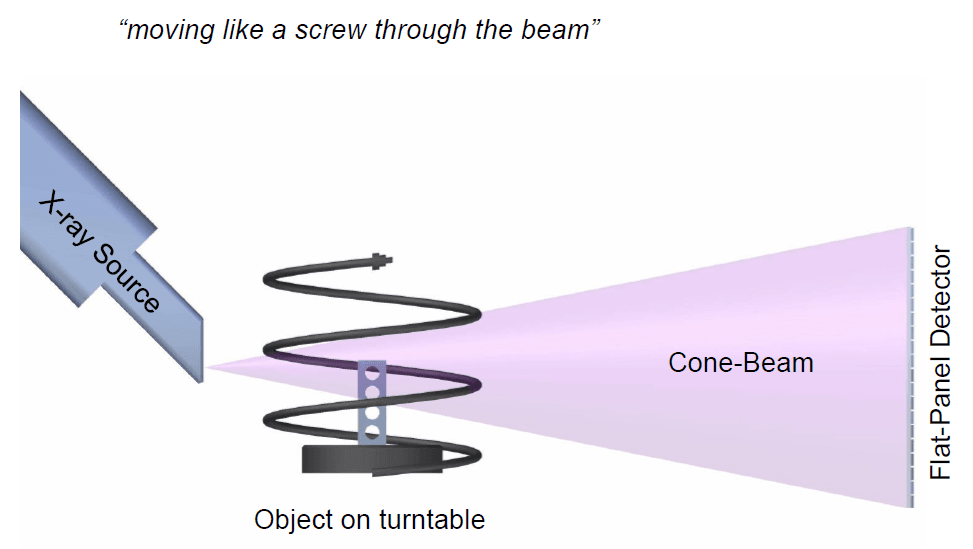
With HeliExtend, the component, the X-ray source, and the detector move in sync during the scan. Instead of a purely circular motion, a helical scan path is created.
Advantages:
- Long objects are captured in a single scan.
- Faster scanning speed.
- Improved image quality.
- Long parts do not need to be positioned at an angle.
- Fewer Feldkamp artifacts. These are typical image distortions that occur at the top and bottom of the field of view during a conventional circular scan, especially with horizontally oriented flat structures.
In practice: We inspect long components such as shafts, pipes, or implants along their entire length in a single continuous scan.
HeliExtend Dual: Maximum Volume, High Resolution
HeliExtend Dual combines the advantages of ScanExtend and HeliExtend. As a result, both the horizontal and vertical measurement volumes are significantly increased, without compromising resolution.
Advantages:
- Maximum increase in scan volume.
- Inspection of larger parts becomes possible.
- High resolution is maintained.
- Efficient scanning of complex components.
In practice: We scan large castings or complex assemblies in their entirety, without losing any important details.
FlexCenter: a virtual axis of rotation
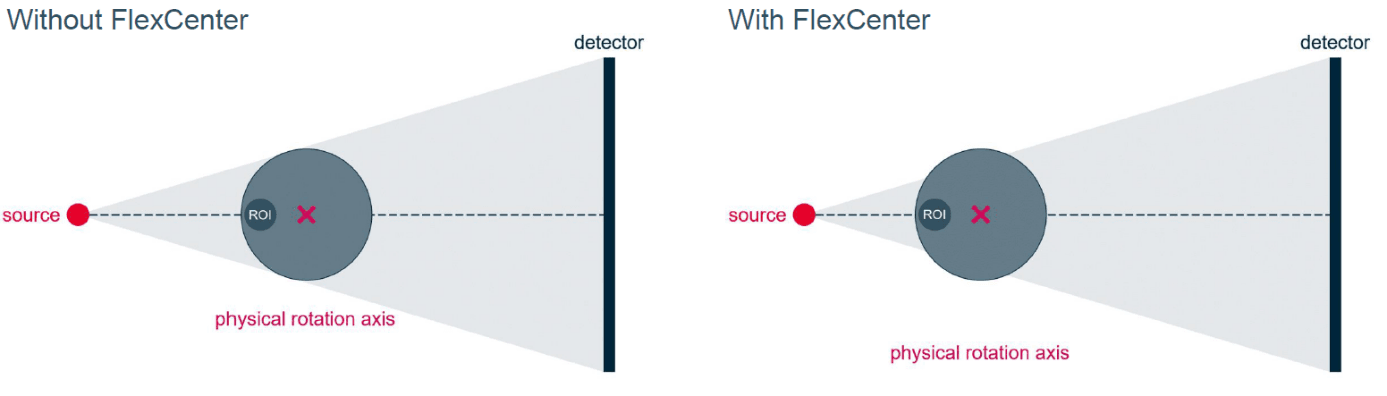
In practice, a component is not always perfectly centered relative to the axis of rotation. With FlexCenter, we create a virtual axis of rotation so that the area that really matters remains centered within the scan range.
Advantages:
- Flexible positioning of parts.
- Optimal use of the scan volume.
- Critical areas remain perfectly centered during the scan.
In practice: if only one specific area of a large component needs to be inspected, we position that area at the center of the scan range without having to precisely align the entire component.
SpeedMode: Smarter Scanning, Shorter Scan Times
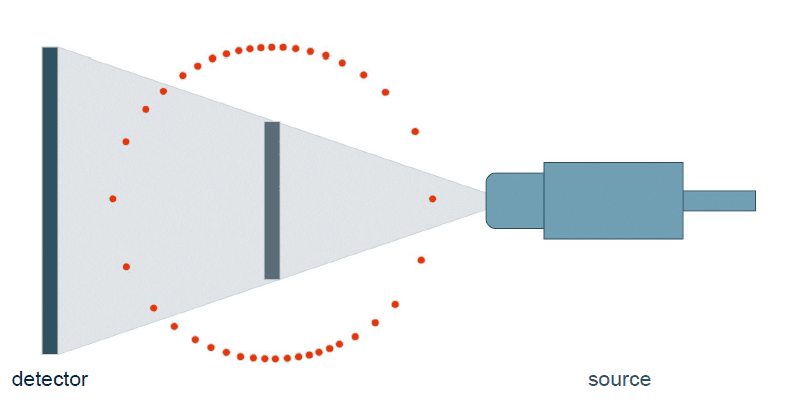
For long, slender parts, it is often unnecessary to collect the same number of projections over the entire rotation. With SpeedMode, the system adjusts the number of scan positions based on the part’s radiographic penetrability: fewer projections in areas that are easily penetrated by X-rays, and more projections in complex or thicker areas.
Advantages:
- Shorter scan time.
- More efficient use of system capacity.
- Maintenance of adequate image quality where needed.
In practice: for tubular or asymmetrical parts, this allows us to significantly reduce the total scan time without losing any relevant inspection data.
ZoomScan: Higher Resolution for Complex Shapes
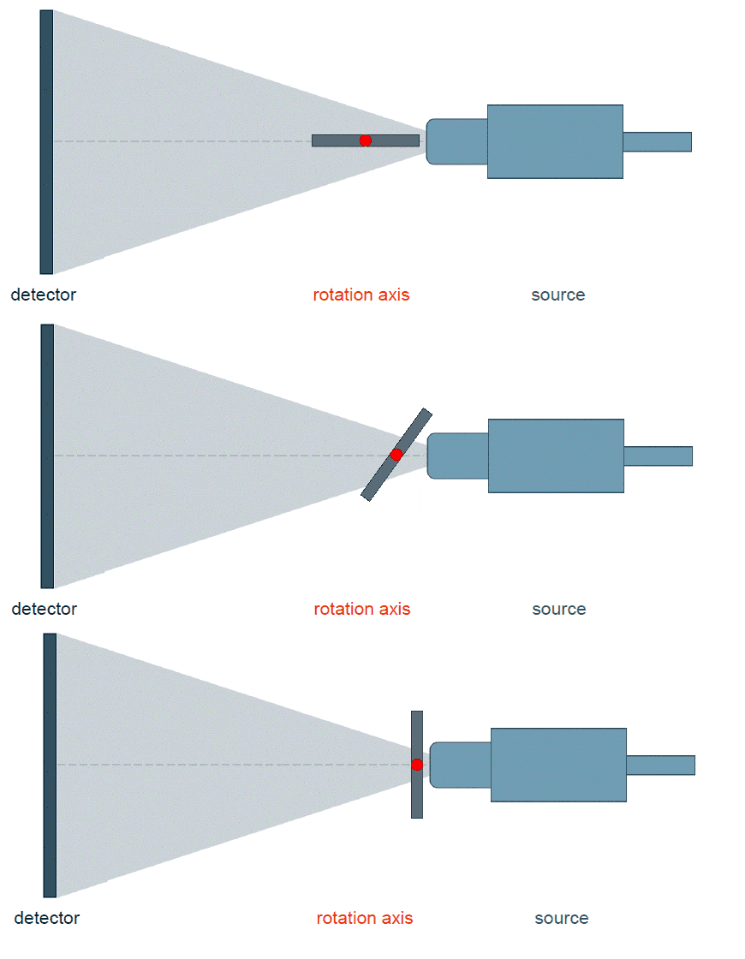
For non-circular parts, we achieve higher resolution using ZoomScan. During the scan, the system automatically adjusts the magnification factor to prevent collisions between the part and the X-ray source. This allows the part to be positioned as close as possible to the source, and the closer it is to the source, the higher the magnification, and thus the resolution.
Advantages:
- Higher scan resolution.
- Optimal use of the available magnification.
- Suitable for complex geometries.
With ZoomScan, smartGuard collision protection is always active, ensuring that the system continues to operate safely as the part moves close to the light source.
In practice: We bring precision components with complex shapes or irregular contours closer to the light source for maximum detail.
LayerScan: for PCBs, batteries, and electronics
LayerScan was developed for flat components such as PCBs, microchips, batteries, and electronic assemblies. Unlike a conventional CT scan, the component does not rotate during the process. The detector and the X-ray source move horizontally and vertically, capturing images from different positions, which are then digitally stacked to form a complete volume.
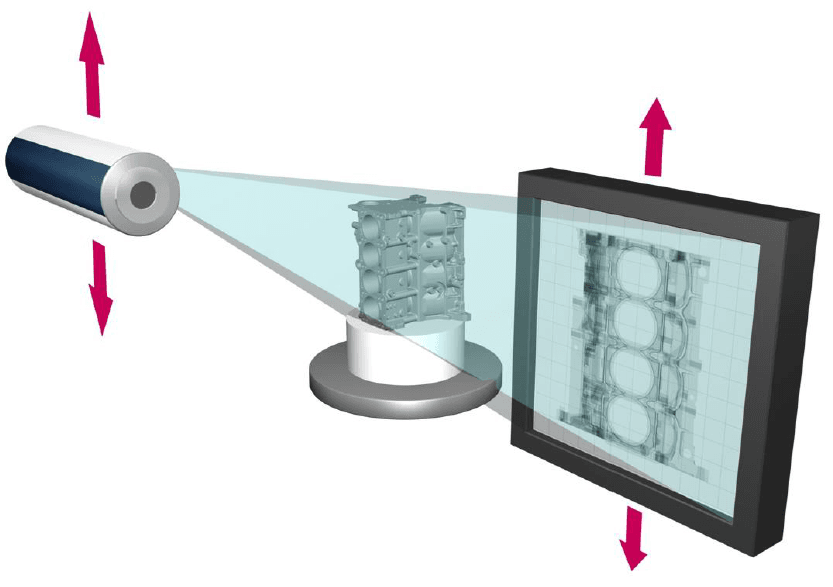
Advantages:
- Excellent for thin and flat structures.
- High-detail rendering of internal layers.
- Fewer geometric distortions.
In practice: When analyzing PCBs, we carefully examine internal connections, solder joints, and multilayer structures without the risk of rotation-related artifacts.
Which strategy is right for your department?
Choosing the right scanning strategy requires expertise. While the circular scan provides a robust foundation, ScanExtend, HeliExtend, and HeliExtend Dual make it possible to inspect larger and longer objects at high resolution. FlexCenter, SpeedMode, ZoomScan, and LayerScan provide additional flexibility, shorter scan times, and optimal image quality.
With the Comet Yxlon FF35 and the ZEISS Metrotom 6 Scout, we cover a wide range of industrial applications, from castings and mechanical components to advanced electronics and battery inspections. And because CT scanning also makes it possible to scan multiple parts at once, batch inspection remains both cost- and time-efficient.
Not sure which approach your component needs? You don’t have to figure that out on your own. Tell us what you want to know about your product, and we’ll work with you to determine the most suitable scanning strategy. As an ISO 17025-accredited testing laboratory, we always respond within 24 hours. Contact us at info@tetravision.be or +32 16 91 04 20.