Quality and functionality control
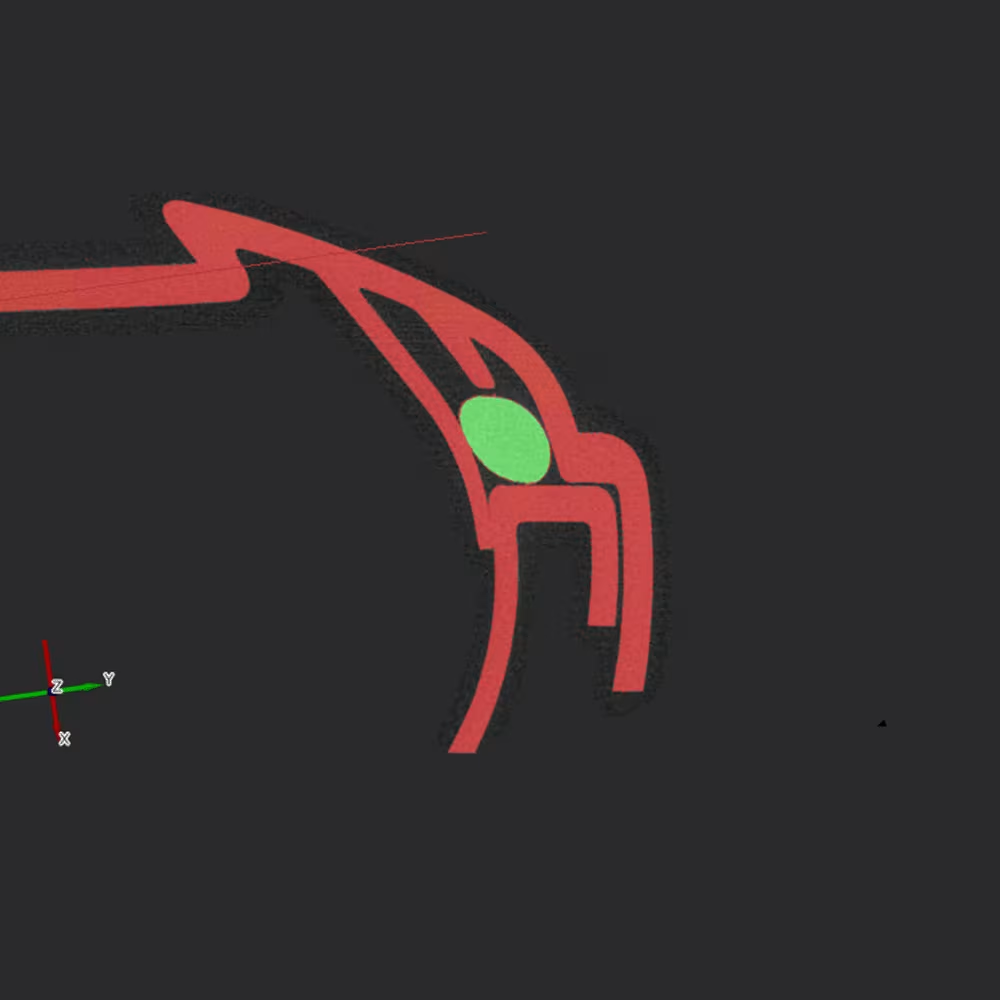
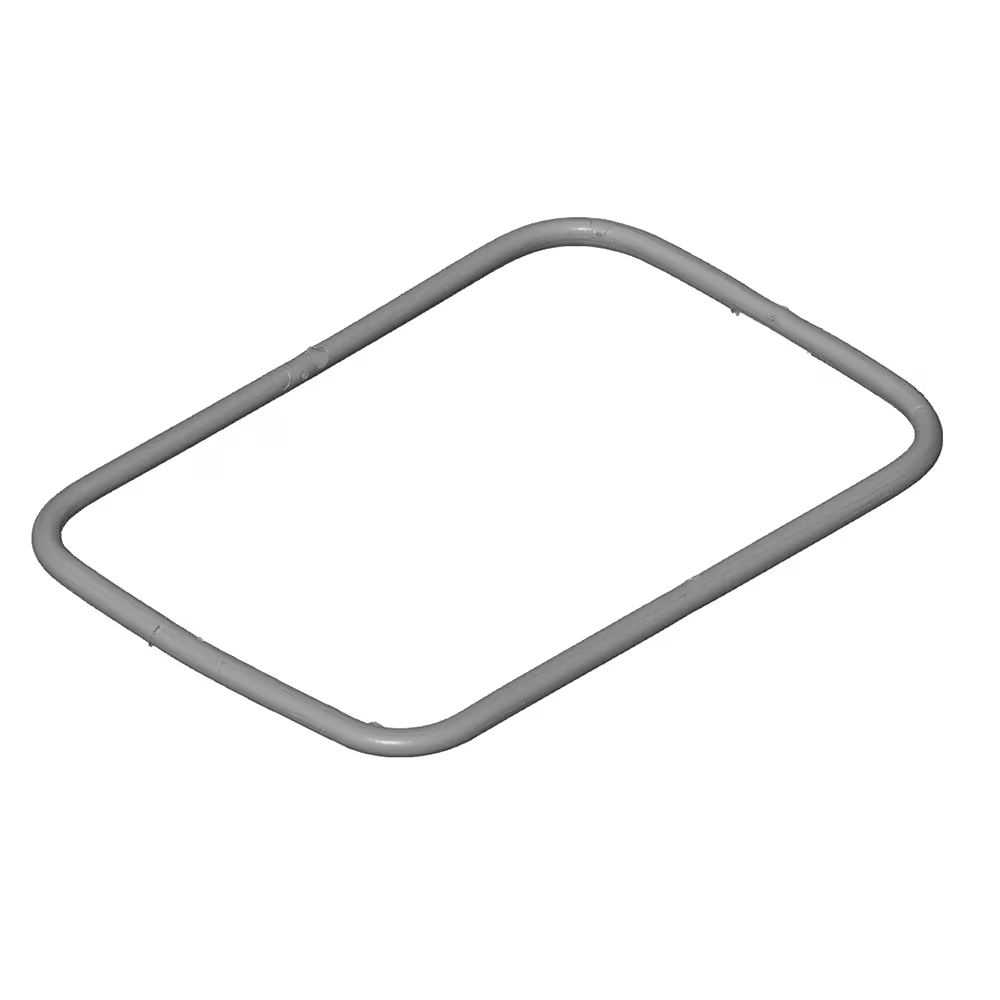
Thanks to a new software update, it is possible to define a section according to a specific path. (No longer limited to the x-y-z axis system.) This allow us to scroll through the entire seal ring and inspect it in even more detail.

Problem Statement
Leaks can occur even when a seal is present that is supposed to prevent them. Often such a seal is located inside the product and is not visible from the outside.
But how do you know if the seal is functioning properly? Does it seal effectively and behave as expected? Or is there any deformation causing gaps? This can lead to leakage or other undesirable behavior.
CT scanning offers a solution here: it allows us to look inside the product and inspect and assess the seal without having to open it. We illustrate this further with a scan of a plastic box.
Black-and-white images
The black-and-white images of the CT scan, similar to the X-ray images you know from the hospital, give us a clear picture of what is happening inside the product.
On the scan, the rubber on the inside is clearly visible. The different shades of gray detected are related to the density of the materials.
- The background appears black,
- the plastic comes in dark gray,
- and the most dense material, the sealing rubber, appears almost white.
In this case, we have benefit from the significant contrast in gray values between the plastic and the rubber, allowing us to clearly distinguish the two materials.


Identifying materials
The software can plot all the gray values in a histogram. Each peak generally indicates a different material.
This allows us to distinguish, for example, between the rubber and the hard plastic. As a result, we can isolate each material, and therefore each component, and polygonize them separately.
Even fine details are clearly distinguishable.


Measuring (unwanted) gaps
The question often arises as to whether air or liquid can enter undesirably. Black-and-white CT images are very valuable here, as they visually show whether there is a possible pathway inside.
You can clearly see where the seal ring makes contact. When a gap is present, it can also be accurately measured. In the example along here, the rubber touches the edges on the right side and bottom. On the left side and top again, the size of the opening can then be measured.
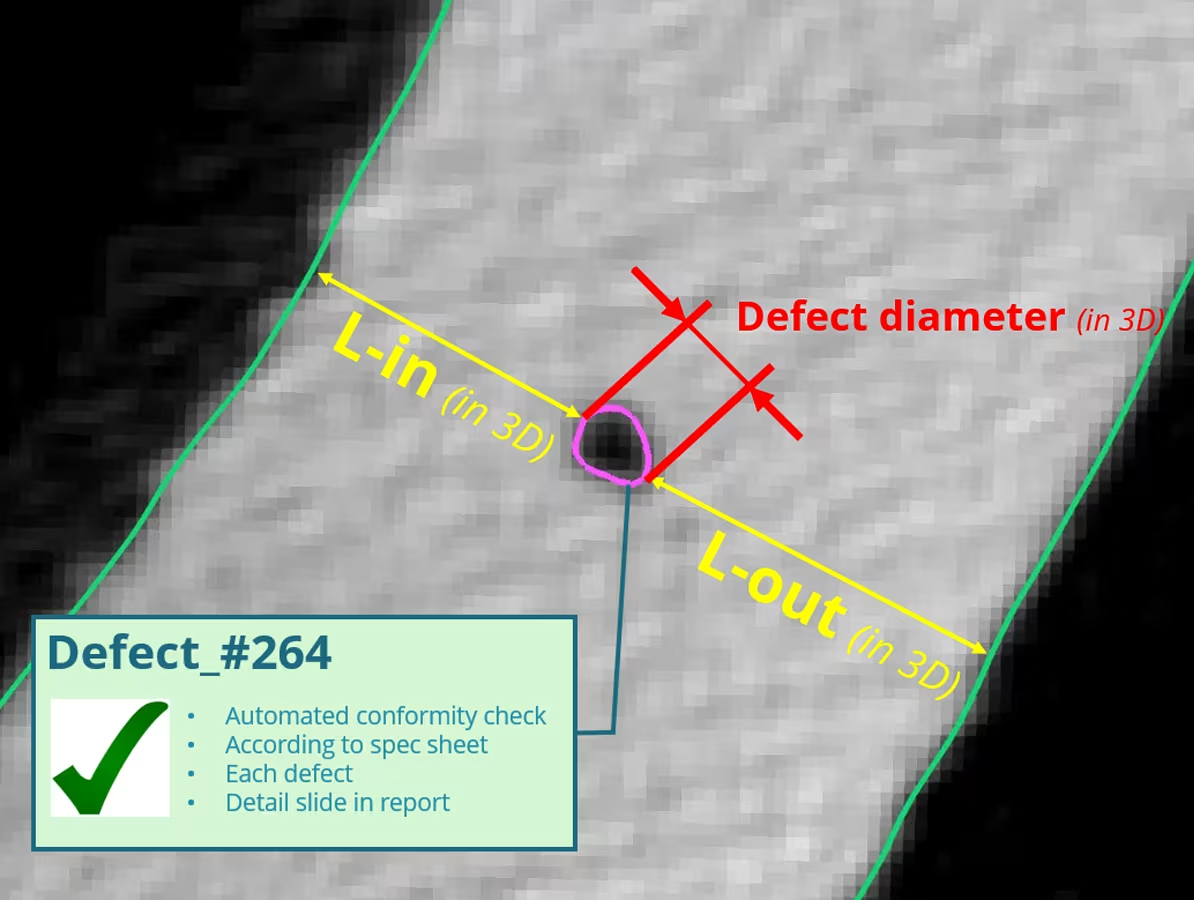
If we zoom in sharply, you can see the resolution of the scan. This scan was performed with a voxel size of 0.04 mm. As a rule of thumb, at least 2.5 to 3 voxels are needed to reliably measure a gap. In this case, that means we can measure openings as small as 0.1 mm. Smaller openings are interpreted by the software as a continuous material, which gives the same result as when the surfaces actually make contact.


New functionality
The black-and-white images give a good idea of what is happening inside. Using the Zeiss Inpect X-ray software, you can “scroll” through your product yourself. This can now also be done via a self-created path.