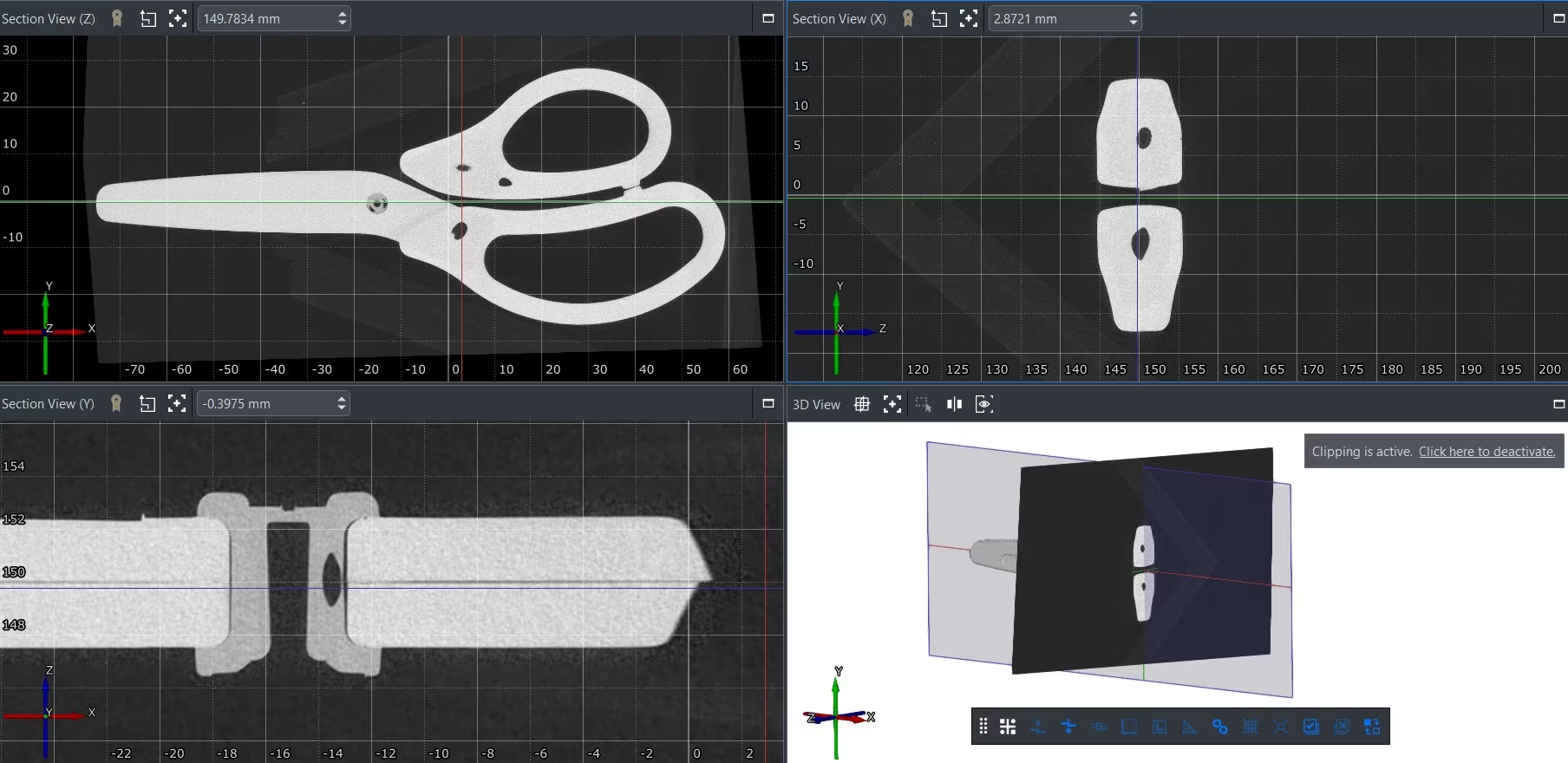
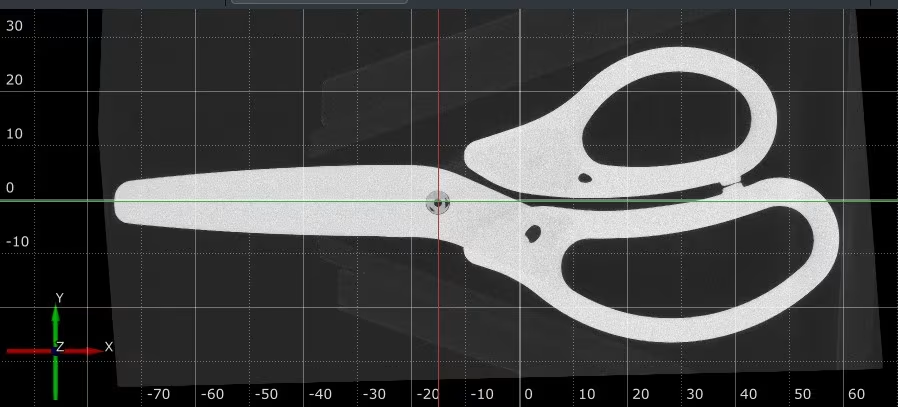
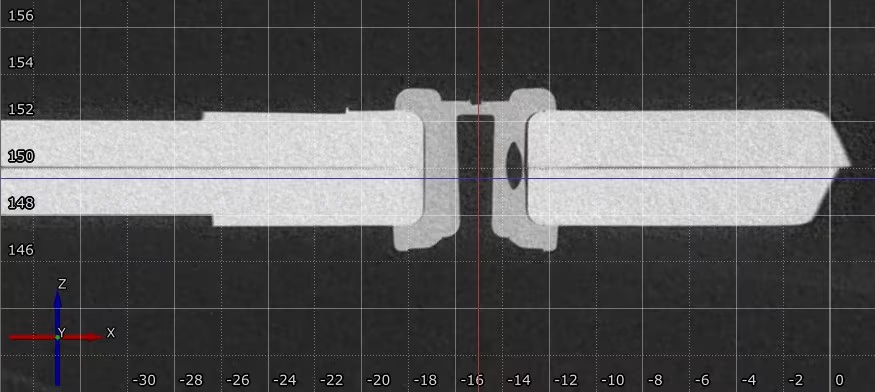
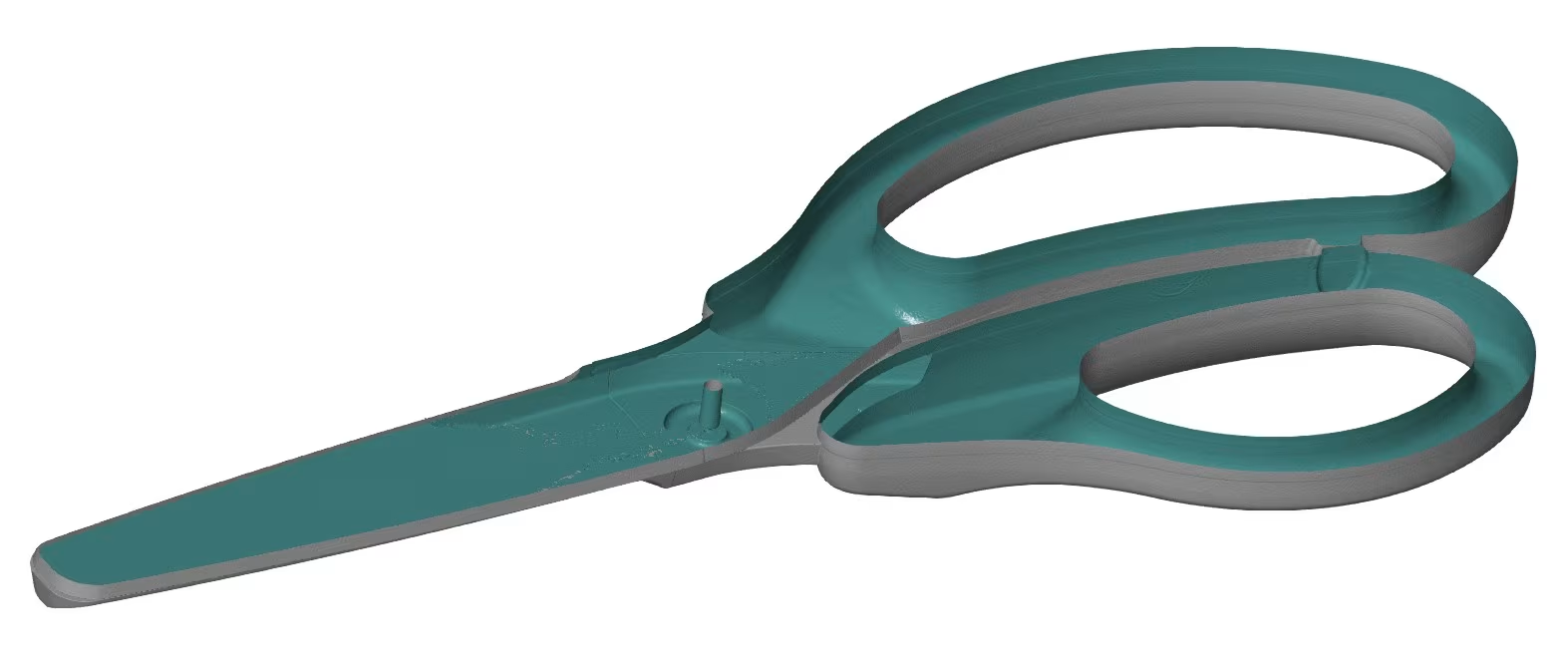
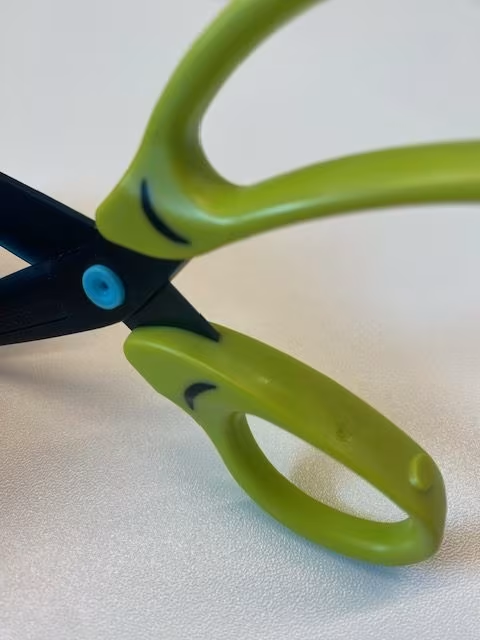
Going through some old plastic samples which I collected in the past, I bumped into an interesting product: a 3-component plastic scissors. Where the 3 different materials are co-injected at the same time, with the hinge installed by in-mold-assembly techniques. (At least that’s what the packaging tells me.)
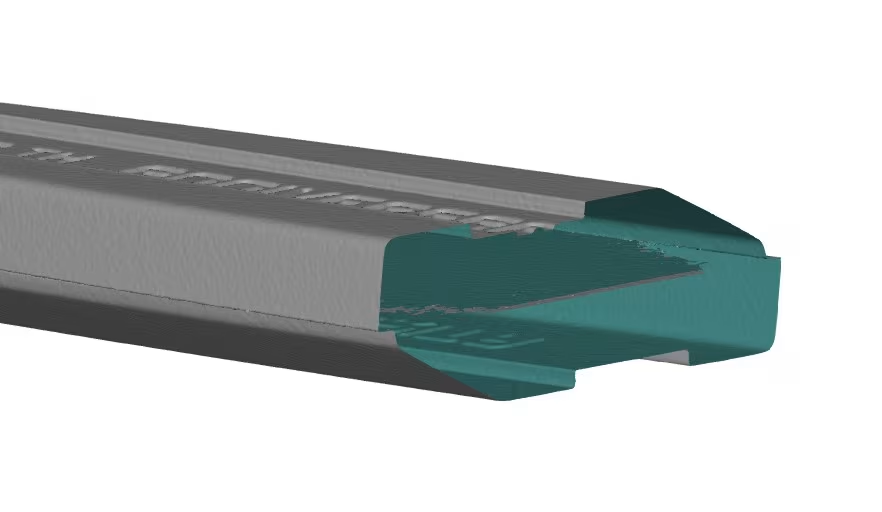
This triggered me enough to put the model into our CT-scanner and examine it in a bit more detail. Below you can see some results of the scan.
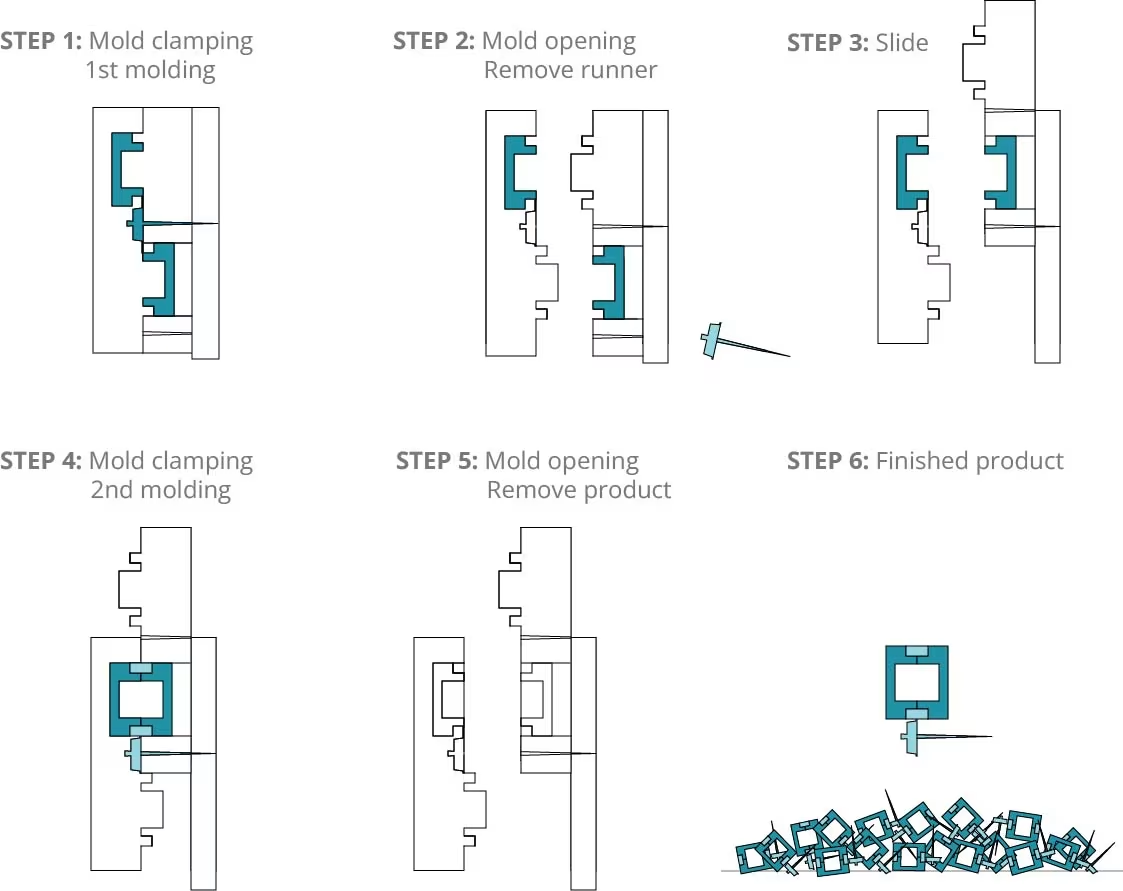
What is in-mold assembly?
Als known as integrated injection molding, it is a manufacturing process where pre-fabricated parts are inserted into a mold cavity and then overmolded or encapsulated during the molding process.
This eliminates post-molding assembly and reduces part count, leading to improved product quality and efficiency.
Principle:
- Tooling acts as an assembly fixture, holding previously molded parts during subsequent molding stages.
- Special technology for in-mold assembly (IMA) is found in the tooling, rather then in the molding press.
- In some cases rotating or sliding plates are used to change cavity configurations between shots.
Benefits
- Reduced part count: In-mold assembly eliminates the need for separate assembly operations and reduces the numbers of parts required, leading to a more streamlined and cost-effective process.
- Improved product quality: The assembly is performed within the mold, resulting in a more consistent and robust component.
- Increased productivity: Eliminating assembly operations and reducing the need for separate presses and molds leads to higher productivity and reduced labor and floor space requirements.
- Faster production: In-mold assembly reduces the total time to produce and assemble.
- Enhanced functionality: This approach allows for the creation of parts with features that would be difficult or impossible to produce through conventional assembly processes.
Examples
- Articulated joints: In-mold assembly can be used to create plastic products with articulated joints by first molding the hole and then molding the pin inside the hole.
- Multi-shot molding: In-mold assembly is often used in multi-shot molding where multiple layers of material are applied during the molding process.
- Electronics encapsulation: In-mold assembly can be used to encapsulate electronic components within a plastic housing.
In-mold assembly is distinct from general multi-shot molding or hard/soft overmolding, as the core concept is assembling separate components inside the mold that would otherwise be assembled outside the mold through methods like snap-fits, welding or adhesive bounding.

Benefits of CT-scanning
Interal assembly verification
- Correct placement/alignment of subcomponents that are assembled within the mold.
- Ensures mechanical interlocks or snapt-fits formed during molding are engaged properly.
- Identifies shifting or rotation of parts during overmolding.
Bonding and weld quality
- Checks the interfaces between the different material layers.
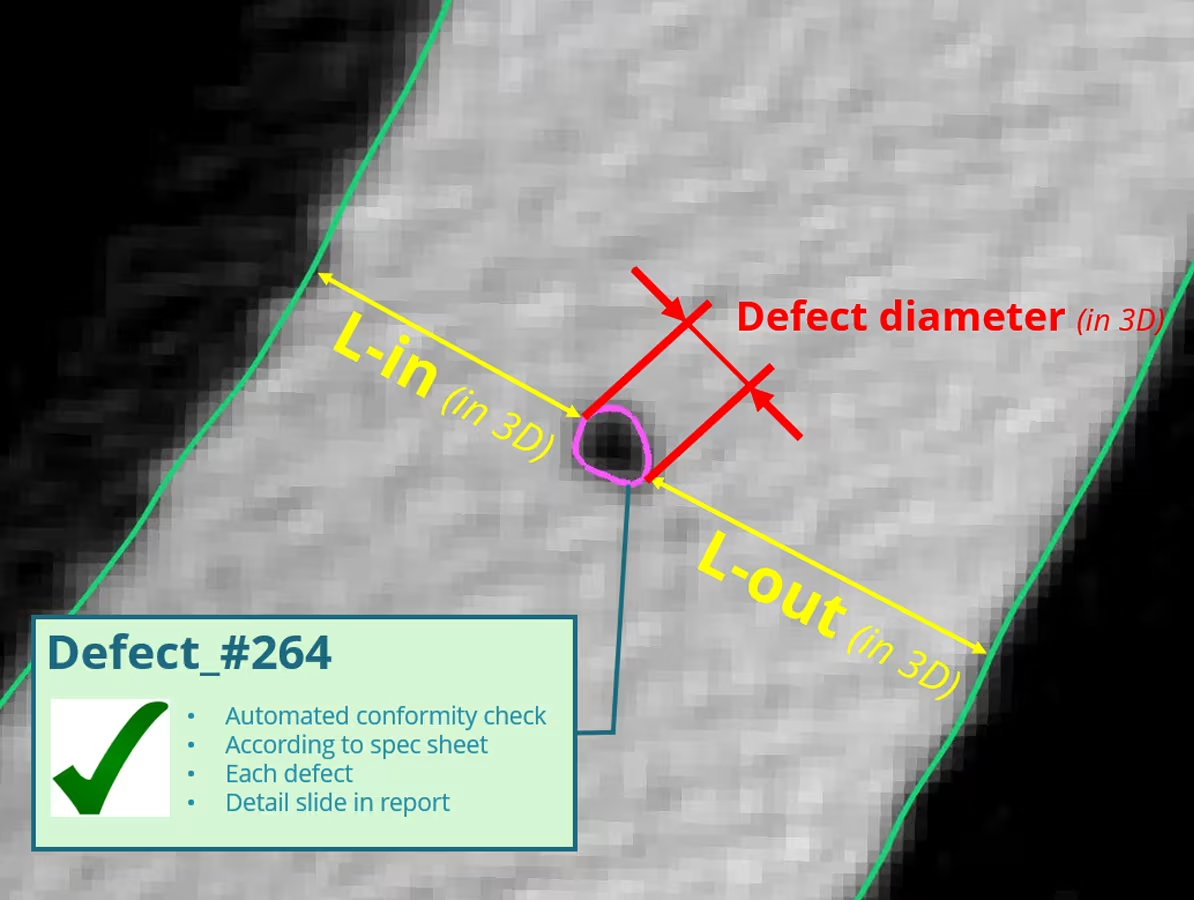
- Can reveal lack of adhesion, cold weld or voids between overmolded sections.
- useful for TPE-over-hard plastic combinations where adhesion quality is critical.
Void detection
- Internal air pockets or bubbles trapped during molding.
- Especially relevant in high-stress zones or tight tolerances areas.
- Can also identify voids at the interface between molded parts and inserts.
Cracks and microstructural defects
- Detect micro-cracks, delamination or resin-rich/resin-starved areas.
- Useful for brittle materials or parts with glass/mineral fillers.
Material flow analysis
- Reveals flow lines, knit lines and swirl patterns that may indicate improper gating, poor temperature control or material incompatibility.
Insert placement analysis
- Verifies position and orientation of embedded metal or plastic inserts.
- Ensures no shift due to injection pressure during subsequent molding stages.
Wall thickness & dimensional consistency
- Precise measurement of internal and external wall thickness.
- Cross-sectional analysis to check for warping, sink marks or overpacking.
Contamination or foreign materials
- Identifies unwanted particles, trapped fibers or non-melted pellets.