Why 3D Scanning is the next level in Metrology?
In the world of precision engineering and quality control, the tools we use to measure define the boundaries of what we can achieve. Traditional coordinate measuring machines (CMMs) have long been the gold standard for dimensional inspection but as products become more complex and production cycles shorter, the demands on metrology are evolving fast.
Enter 3D scanning: A technology that’s not just complementing traditional methods, but in many ways, redefining what’s possible.
Beyond points: capturing the full picture
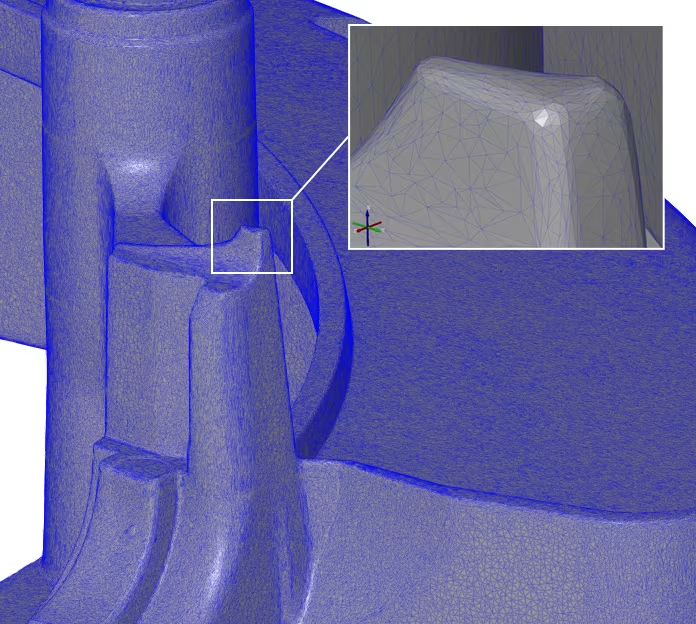
CMMs typically work by probing specific points on a part to compare against CAD models or drawings. It’s accurate but slow, and limited to surfaces that are easily accessible.
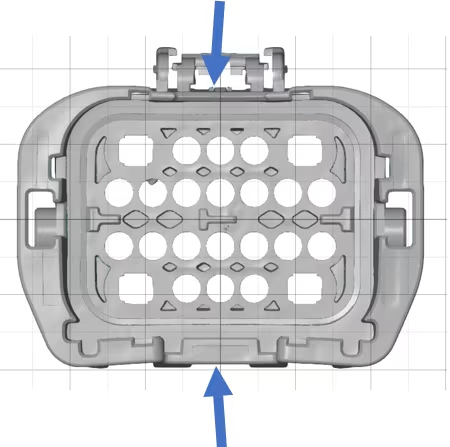
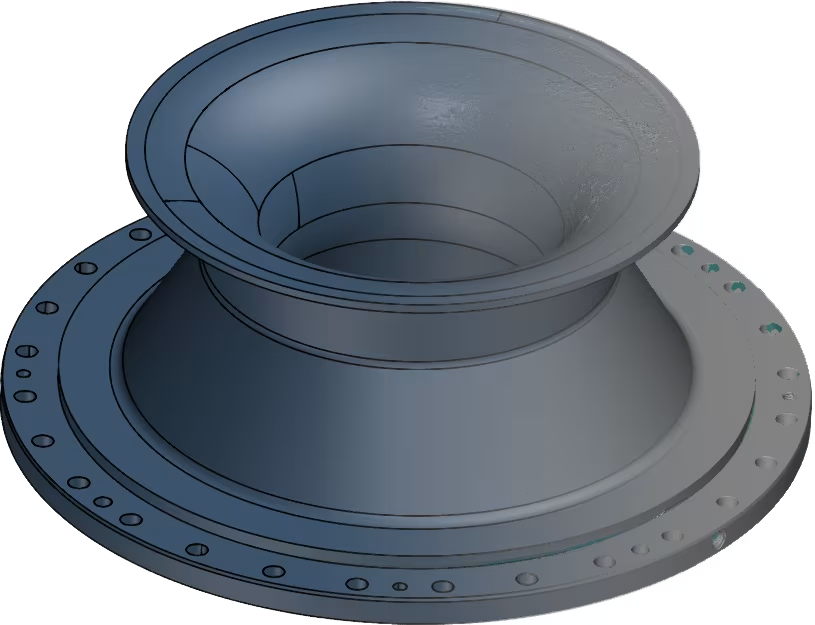
3D scanning flips the script. Using structured light (or laser-based systems), it captures millions of data points in seconds, creating a full 3D digital representation of your part, not just a handful of coordinates.
This difference isn’t just technical, it’s transformational:
- You see the whole geometry, including freeform surfaces, organic shapes, and intricate features.
- Undercuts, radii, complex curves: features that a CMM might ignore or struggle to reach, are effortlessly digitized.
- With color mapping and deviation analysis, you get an immediate visual insight into tolerances and deformation.
Faster measurements, smarter workflows
Speed is more than convenience, it’s a competitive advantage.
Compared to the often lengthy setup and probing cycles of traditional CMMs, 3D scanning slashes inspection time dramatically:
- Setup takes minutes, not hours.
- Full-part inspection can be done in a single scan.
- Live feedback accelerates iteration in R&D or production environments.
For industries like automotive, aerospace, and mold making, this translates directly into:
- Shorter development cycles
- Faster root cause analysis
- Reduced downtime on the shop floor
Cost efficiency that grows with you
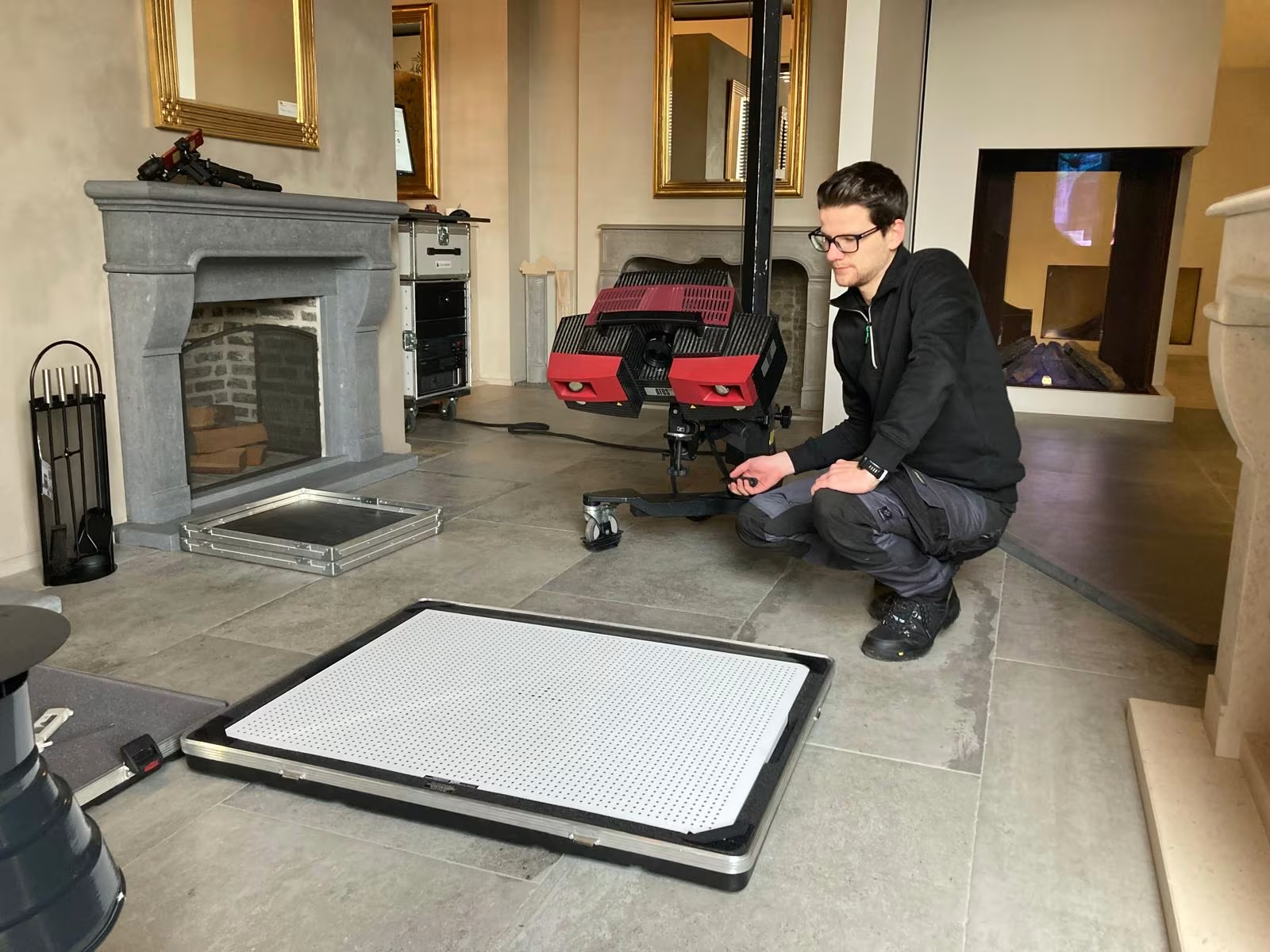
3D scanning offers flexible and often more cost-effective alternatives:
- There are portable scanners: We can bring the lab to your factory floor.
- No need for complex jigs or part reorientation: Scanning adapts to the part, not the other way around.
- Ideal for first article inspections (FAI), reverse engineering, and quality control without the capital burden of traditional equipment.
Seeing the invisible: Enter CT-scanning
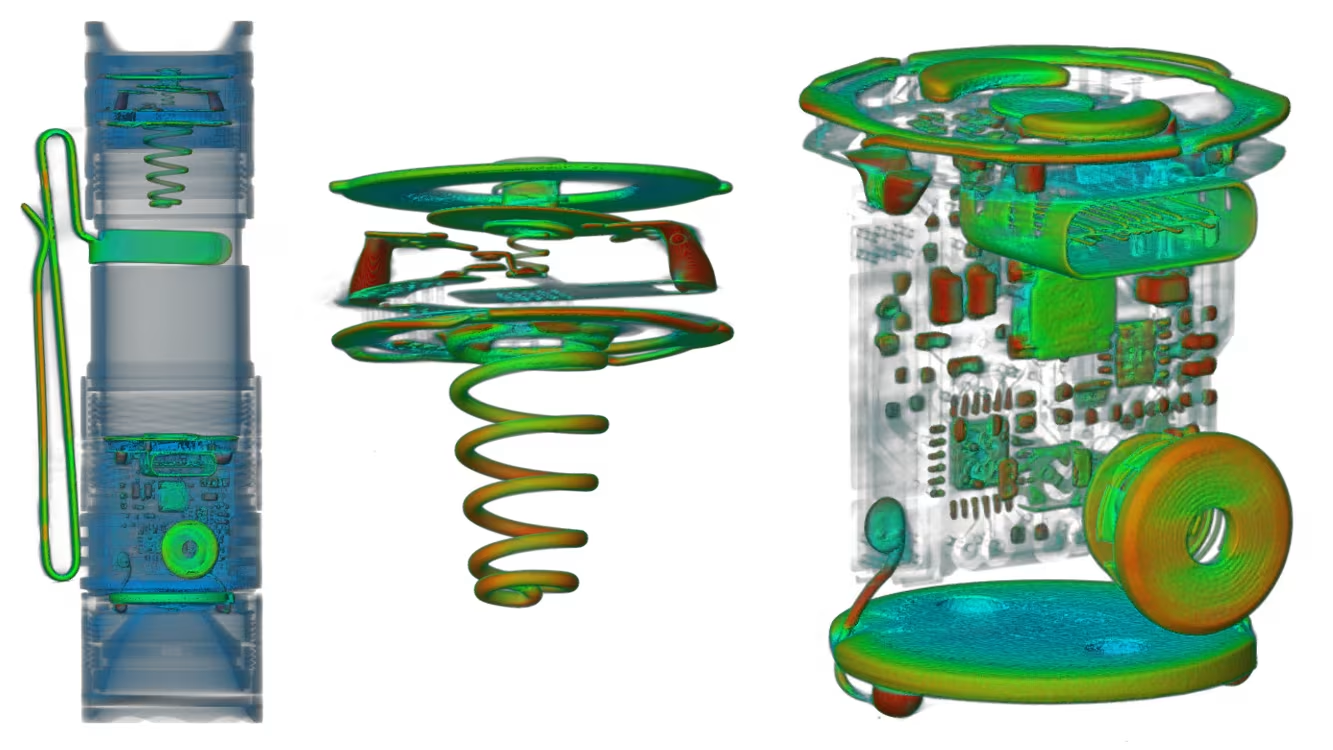
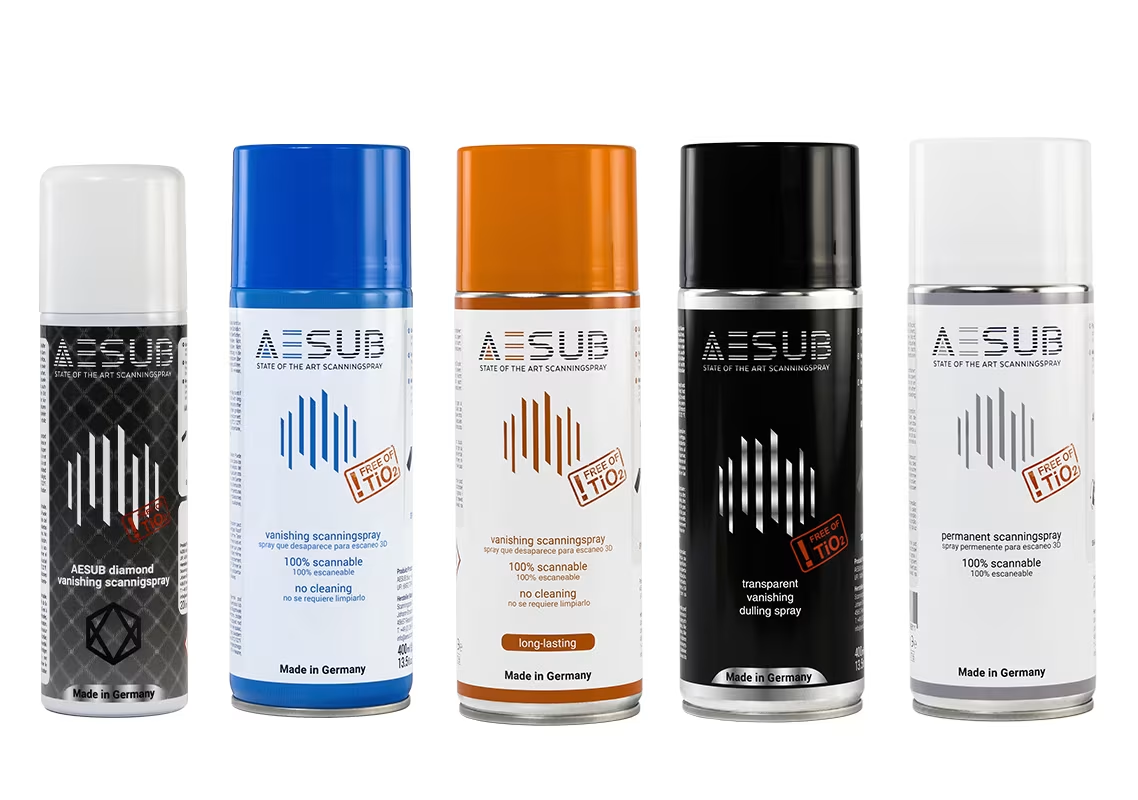
Of course, not every part is ideal for optical scanning. Transparent materials, highly reflective surfaces, or deeply hidden internal geometries can challenge even the best scanners.
That’s where industrial CT scanning (computed tomography) steps in, a true game-changer. CT lets us:
- Inspect internal features non-destructively
- Detect voids, porosity, and internal defects
- Measure complex assemblies without disassembly
It’s the ideal technology for parts where traditional or optical methods fall short.
The future of metrology is hybrid
At TetraVision, we don’t believe in one-size-fits-all. That’s why we see ourselves as an extension of your in-house measurement department, offering both optical 3D scanning and CT scanning. This way our flexible and accurate metrology solutions can be combined with your internal equipment and expertise.
Whether you’re prototyping a new design, performing high-precision inspections, or reverse-engineering a specific component, 3D scanning unlocks a level of speed, clarity, and insight that traditional methods simply can’t match.
Ready to take the next step?
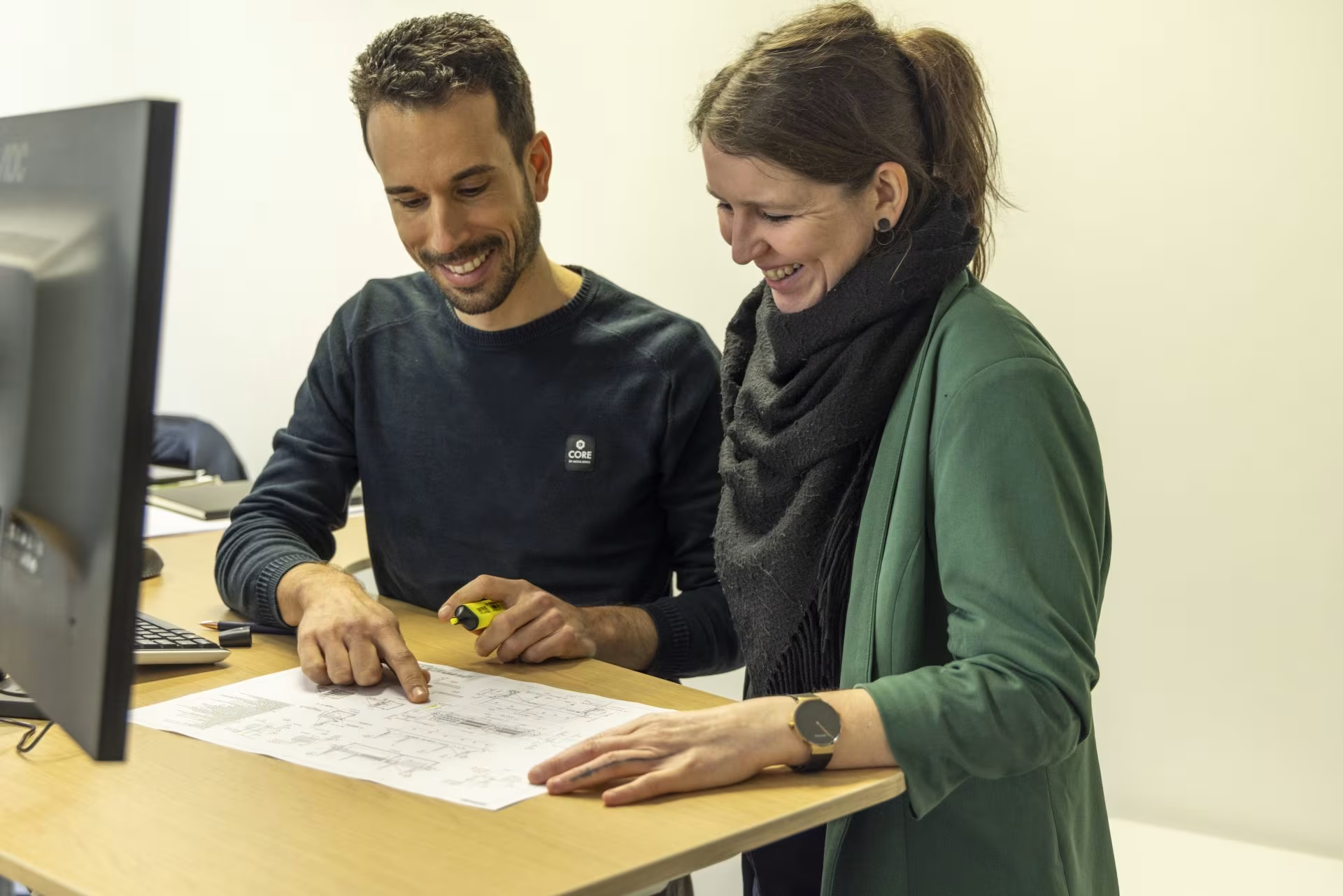
If you’re curious about what 3D scanning can do for your business, or you’re not sure if it’s the right fit, we’re happy to guide you.
Our team can evaluate your parts, processes, and goals, and recommend the best metrology solution, whether that’s optical or CT scanning.
Let’s measure smarter, together.
Contact us today and find out more on what we can mean for your business.